Search AquaLots
Find fish, plants, invertebrates and equipment
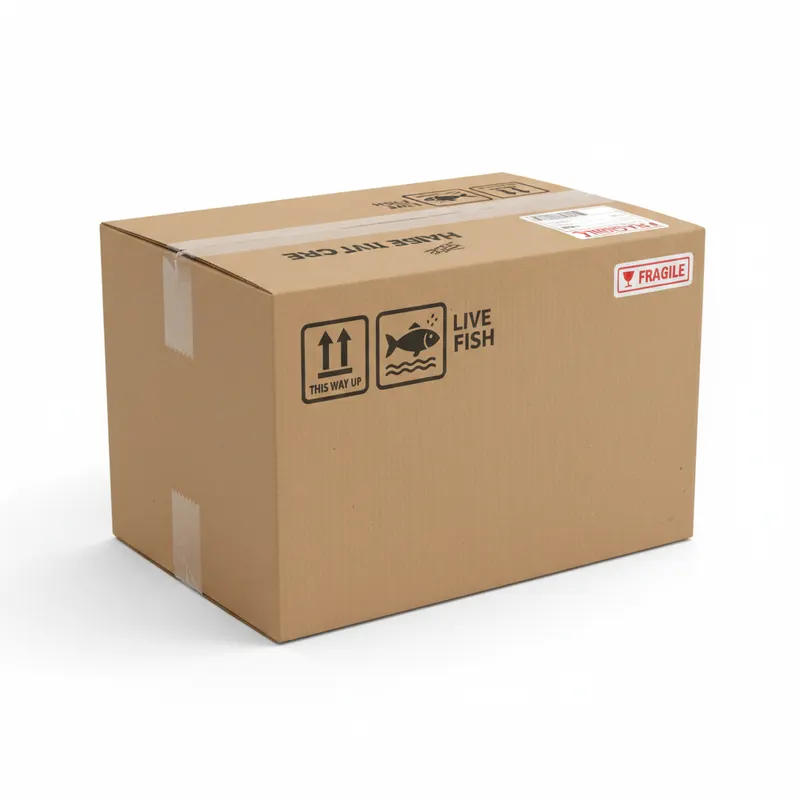
How to Buy Fish Online in the USA: The Complete Guide
22 April 2026
Buying fish online in the United States has never been more popular — and never more confusing. Which shipping carrier do you use? What does a live arrival guarantee actually mean? How do you tell a legitimate seller from a scammer? This guide answers every question, from placing your first order to releasing your fish into the tank.
Contents
Why buy fish online?
Walk into a big-box pet store and you'll find the same thirty species in every location across the country — neon tetras, common plecos, fancy guppies, and a rotation of cichlids that hasn't changed in twenty years. The fish are often stressed from long supply chains, medicated as standard practice, and raised in conditions designed for quantity rather than quality.
Online fish buying exists in an entirely different universe. Specialist breeders produce specific strains, color morphs, and rare species that will never appear in retail. Fellow hobbyists rehome healthy surplus from established, well-maintained tanks. Dedicated farms in Florida and other warm states ship fish that have never seen the inside of a truck for days at a time. The variety is exponentially broader, the sourcing is often more transparent, and the fish — when you buy from the right places — are frequently healthier than anything available locally.
The trade-off is that buying a living animal through the mail requires understanding a set of logistics that don't apply to any other kind of online purchase. This guide covers all of it.
The US online fish marketplace landscape in 2025
The US online fish market has gone through significant disruption over the past decade. Understanding who the players are helps you make better buying decisions.
The old guard — mostly gone or declining
AquaBid was the dominant hobbyist fish auction site for years — an eBay-style platform where collectors, breeders, and importers listed everything from common guppies to rare wild-caught species. As of 2024–2025, AquaBid is widely described by serious hobbyists as "pretty much dormant." Activity has dropped dramatically and finding reliable, active listings has become difficult. It still exists and occasional finds appear, but it's no longer the vibrant marketplace it once was.
eBay still operates for fish sales but the fee structure — listing fees, final value fees, PayPal or payment processing fees — eats significantly into seller margins, which tends to push prices higher than equivalent sales on dedicated platforms. The seller feedback system provides some protection but eBay's policies around live animals are inconsistent, and winning a live animal dispute can be difficult.
The problem platforms
Facebook Marketplace prohibits the sale of live animals. This is a blanket platform policy, not a local enforcement variable — live fish cannot be listed for sale on Facebook Marketplace regardless of location. Facebook Groups are a different matter: private fishkeeping groups frequently facilitate fish sales between members, operating in a gray area the platform tolerates. These can be productive sources for local pickup arrangements, but they offer essentially no buyer protection.
Craigslist allows local fish sales and can be a good source for large tanks, equipment, and local pickup of fish. The scammer problem is real — common fraud patterns include fish listed at suspiciously low prices, requests for payment via gift card or wire transfer, and sellers who can never arrange a meeting in a public place. For local pickup of inexpensive fish where you can inspect before committing, Craigslist works. For anything valuable or requiring shipping, avoid it.
The current landscape
Dedicated online fish retailers — LiveAquaria, Aquatic Arts, Wet Spot Tropical Fish, Imperial Tropicals — operate professionally, ship on established schedules, and offer live arrival guarantees. These are legitimate, reliable businesses. Prices reflect professional operations; you're paying for quality, guarantees, and the infrastructure of a real fish business.
Light.fish launched as a modern hobbyist-to-hobbyist marketplace with better UX than AquaBid. It remains smaller than the old AquaBid at its peak but is growing and offers a functional platform for both buyers and sellers.
AquaLots is a dedicated aquatics marketplace connecting US hobbyists with sellers, breeders, and specialist keepers, offering auctions, fixed-price listings, and prize competitions in a purpose-built environment designed for the live fish trade.
Shipping carriers: who ships live fish and who doesn't
This is the most critical piece of information for anyone entering the online fish hobby. Not all carriers ship live animals, and using the wrong carrier means dead fish.
USPS: the primary hobbyist route
The United States Postal Service is the workhorse of the hobbyist fish trade. USPS allows live fish shipments under Priority Mail and Priority Mail Express services, and the price point is accessible to small breeders and individual sellers who couldn't qualify for or afford FedEx's commercial live animal program.
Priority Mail has a 1–3 day delivery window depending on zone distance. For fish, this is the minimum acceptable service — anything slower risks oxygen depletion and ammonia buildup in the shipping bag. Most experienced shippers recommend Priority Mail only for shorter distances (zones 1–4) where delivery is realistically 1–2 days.
Priority Mail Express is USPS's overnight service, with delivery guaranteed by a specific time the following morning in most cases. It's more expensive but significantly safer for fish and the appropriate choice for longer distances, sensitive species, or cold weather shipping. Many serious hobbyist sellers default to Priority Mail Express regardless of distance.
The important caveat about USPS and live fish: not all post offices accept live animal shipments. USPS policy permits it; individual post office compliance is inconsistent. Some offices refuse live animal packages regardless of policy. Experienced sellers know which locations in their area accept them and drop off there. As a buyer, if you're shipping your own fish, call ahead and ask specifically whether the counter staff will accept a live fish shipment — don't assume the post office nearest you will cooperate.
FedEx: the professional route
FedEx ships live fish but with significant restrictions that make it impractical for most individual hobbyist sellers. FedEx requires prior approval for all live animal shipments — you cannot simply drop off a box of fish at a FedEx location. The approval process involves submitting packaging samples to FedEx's packaging lab for evaluation and approval, working with a FedEx sales representative, and establishing an account set up for live animal shipping.
For established fish businesses — farms, importers, professional breeders — FedEx Priority Overnight and FedEx First Overnight are excellent services with reliable, fast delivery. For individual hobbyists selling surplus fish, the approval barrier makes it impractical.
FedEx's live fish shipping requirements include specific packaging standards: minimum 2-mil plastic bags, triple bagging, absorbent materials inside, and a sturdy outer container with specific burst strength ratings. Live shipments must go Monday through Thursday to avoid weekend delays — FedEx explicitly states this for live animal shipments.
UPS: do not use
UPS does not ship live fish. This is an explicit UPS policy, not an interpretive gray area. UPS's terms of service prohibit live animals (with narrow exceptions for certain commercial livestock operations that don't include ornamental fish). Sellers who ship fish via UPS are violating carrier terms and creating significant risk — if the package is identified, it may be refused, confiscated, or the account terminated. Do not use UPS for live fish shipments, and be cautious of any seller who claims to ship fish via UPS.
Temperature limits and seasonal shipping
Fish can be shipped safely only within specific temperature ranges. Both extreme cold and extreme heat can kill fish in transit even when packaging is otherwise perfect.
The general rule is: do not ship when temperatures at either the origin or destination will fall below 32°F (0°C) or exceed 90°F (32°C) at any point during the transit window. This means checking the forecast at both locations — not just your local conditions.
Cold weather shipping: heat packs are placed inside the insulated box alongside the bags of fish. Standard heat packs produce heat for 40–72 hours depending on formulation. Critical: heat packs must never make direct contact with the fish bags — contact burns fish. Place the heat pack against the inside of the box lid, separated from bags by a layer of newspaper. In very cold weather, ship Priority Mail Express to minimize time in transit.
Hot weather shipping: extreme summer heat is the less commonly discussed danger but equally deadly. Fish can overheat in a black mail truck parked in the summer sun for hours. Some sellers suspend shipping during summer heat waves; others ship with cold packs (though these must also be isolated from direct fish bag contact). Many experienced shippers use heat packs year-round in winter and simply ship Priority Mail Express to minimize transit time in summer.
The acceptable window: experienced fish shippers often describe fall and spring as the ideal shipping seasons — mild temperatures at both origin and destination minimize both cold and heat risk. Winter and summer shipping can work with appropriate precautions but requires more careful planning.
When to ship: the Monday–Thursday rule
Ship live fish only Monday through Thursday. This rule exists because of weekend delivery. If a package ships Friday and encounters any delay, it sits in a facility over the weekend with no delivery until Monday — typically fatal for fish in a shipping bag. Even Priority Mail Express may not deliver on Sunday in all areas. Shipping Monday through Thursday ensures that even a one-day delay still results in a weekday delivery.
Many professional fish sellers only ship on Mondays and Tuesdays to maximize the buffer against delays. Individual hobbyist sellers often follow the same schedule.
Before ordering from any seller, confirm their shipping day policy. A seller who ships Fridays is taking unnecessary risks with your fish regardless of how reputable they otherwise appear.
Live arrival guarantees: what they mean and what they don't
Most reputable online fish sellers offer a live arrival guarantee (LAG). Understanding exactly what this means is essential before you rely on it.
A live arrival guarantee typically means: if fish arrive dead, the seller will replace them or refund their cost. This sounds comprehensive, but the fine print matters.
Most LAGs require: photographic evidence of dead fish within a specific time window (often 1–2 hours of delivery), the bag still sealed or recently opened, and submission of a claim via specified channels. Some sellers require video evidence of opening the bag. Documentation standards are strict because sellers have legitimate concerns about fraud.
Most LAGs do not cover: fish that die within 24–48 hours of arrival (delayed mortality from transit stress), shipping costs (you typically pay to ship replacements), losses resulting from your tank conditions, or fish that arrive alive but die shortly after acclimation. Shipping costs are almost universally excluded — if your fish arrive dead, you'll typically receive replacement fish or store credit but will still pay to have the replacements shipped.
Most LAGs are voided by: refusal of delivery (fish that sit uncollected at a post office), no one home to receive the package (leaving fish in a mailbox for hours), shipping to addresses without weekday delivery, and failure to be present on the specified delivery date.
The practical implication: a LAG is meaningful protection against DOA fish from a reputable seller, but it's not travel insurance for the entire transaction. Have your tank ready, be present on delivery day, photograph everything immediately on opening, and understand that delayed mortality — fish that arrive alive but die within 24 hours of transit stress — is your risk, not the seller's.
Finding trustworthy sellers
The US online fish market has trustworthy sellers at every level — professional retailers, specialist breeders, and hobbyists selling surplus. The challenge is distinguishing them from bad actors.
Professional retailers
Established names like LiveAquaria, Aquatic Arts, Wet Spot Tropical Fish, and Imperial Tropicals have years of operating history, verifiable customer reviews across multiple platforms, documented shipping practices, and real customer service infrastructure. They're not necessarily the cheapest option, but the risk level is low.
Specialist breeders
Many of the best fish available online come from dedicated hobbyists who specialize in specific species or strains — guppy breeders producing specific tail types, pleco breeders maintaining particular L-numbers, cichlid specialists working with specific geographic populations. These sellers are often found through species-specific forums, Facebook groups, and marketplaces like AquaLots. The best ones have established reputations within their communities, references from other buyers, and documented breeding projects.
Hobbyist sellers
Everyday fishkeepers selling surplus fish — livebearers that outbred their tank capacity, fry from a successful spawn, fish from a tank being broken down — make up a significant part of the online market. Quality varies widely. A hobbyist who has maintained a colony of healthy fish for two years and is selling genuine surplus is often an excellent source; someone clearing out an unhealthy or overstocked tank is not.
Red flags: how to spot a scam or bad seller
The fish-selling scam is a real and common problem. Recognizing the patterns protects both your money and the welfare of any fish involved.
Prices dramatically below market rate — if someone is selling zebra plecos (typically $80–200+ each) for $15, something is wrong. Either the fish don't exist, or they're in terrible condition. Research realistic market prices before shopping.
No photos of their actual fish — stock images sourced from other sellers' listings or from the internet are a major red flag. Legitimate sellers photograph their own stock.
Payment via gift card, wire transfer, or Zelle with no buyer protection — these payment methods offer zero recourse if the seller disappears. Use PayPal Goods and Services (not Friends and Family), which provides buyer protection for non-delivery or significantly not as described.
Unable to provide references or a transaction history — established sellers have records of past successful transactions. New accounts with no feedback or history require extra caution.
Vague shipping arrangements — legitimate sellers have clear, documented shipping policies. Sellers who are evasive about exactly how, when, and with what carrier they ship are not operating a professional setup.
Requests to communicate outside the platform — moving a transaction off a marketplace removes the platform's dispute resolution. Legitimate sellers have no reason to do this.
Claims to ship via UPS — UPS prohibits live fish. A seller claiming UPS shipping either doesn't know what they're doing or isn't being honest about the carrier.
Placing your order: a step-by-step checklist
Before clicking buy, run through this checklist:
Your tank is cycled, established, and has appropriate water parameters for the species you're buying
You have a quarantine tank set up and running (see below)
You've verified the seller's shipping day policy — they ship Monday–Thursday only
You've checked the weather forecast for both your location and the seller's for the transit window
You've confirmed someone will be home to receive the package on delivery day
You've read the seller's live arrival guarantee terms in full
You've confirmed the seller ships to your state (some species have state-by-state restrictions)
You've researched whether your state has any restrictions on the species you're ordering
You have dechlorinator appropriate for your water supply ready
You know exactly how you'll acclimate the fish on arrival
Receiving your fish: the first 24 hours
The box arrives. This is where your preparation pays off.
Open the box immediately on arrival — do not leave it in a hot mailbox, on a sun-exposed porch, or in a cold entryway for any longer than necessary. Fish can die within an hour in extreme ambient temperatures even in properly insulated packaging.
Before opening any bags, photograph the sealed bags inside the box. If any fish are DOA, you'll need this documentation for the live arrival guarantee claim. Photograph clearly showing sealed bags and any dead fish visible through the bag. Then open the bags one at a time.
If all fish are alive, do not immediately celebrate and skip the acclimation process. Fish that appear fine on arrival can be severely stressed from oxygen depletion, elevated ammonia from the shipping water, and temperature differentials. The next step — acclimation — determines whether fish that survived shipping will survive the transition to your tank.
Acclimation: doing it right
Shipping water is not aquarium water. It has typically higher ammonia (from fish waste in transit), different temperature, different pH, and different hardness than your tank. Moving fish directly from shipping bag to aquarium is one of the most common ways to kill fish that survived the journey.
Temperature acclimation (always required)
Float the sealed bag in your aquarium for 15–20 minutes. This equilibrates the water temperature inside the bag with your tank temperature, preventing thermal shock. Do not open the bag yet.
Water parameter acclimation
The drip method is the most reliable for sensitive species. After temperature equilibration, open the bag and place the fish and bag water in a clean bucket. Using airline tubing with a knot or valve to control flow, siphon water from your aquarium into the bucket at a rate of roughly 2–4 drops per second. When the water volume in the bucket has doubled, discard half the water and repeat. After two cycles, the fish have been gradually introduced to your tank water chemistry.
For hardy species, a simpler approach works: after temperature equalization, open the bag, add a small amount of tank water every 5 minutes for 20–30 minutes, then net the fish into the tank. Crucially: do not pour the bag water into your tank. Shipping water typically contains elevated ammonia and potentially pathogens — net the fish out and discard the shipping water.
After introduction
Dim the tank lights for several hours after introduction. Darkness reduces stress during the most vulnerable period. Don't feed on the first day — fish are too stressed to eat and uneaten food will spike ammonia precisely when the fish are least able to tolerate it.
Quarantine: the step most people skip
Every fish purchased online — regardless of how reputable the seller — should spend 2–4 weeks in a quarantine tank before entering your main display tank. This applies even to healthy-looking fish from the most trustworthy sources.
The quarantine tank doesn't need to be elaborate: a 10–20 gallon tank with a sponge filter, heater, and minimal decoration is sufficient. The purpose is to allow any pathogens the fish are carrying to manifest and be treated in isolation, rather than introducing them to an established community tank.
Common issues that appear in quarantine include ich (which appears as white spots within days of shipping stress triggering a suppressed infection), internal parasites (weight loss, stringy white feces), bacterial infections (fin deterioration, ulcers), and velvet (fine gold or rust-colored dusting). Treating these in quarantine costs a small amount of medication and a few weeks of time. Treating them after introduction to a community tank can cost you your entire tank population.
The quarantine protocol: observe daily for the first week without medicating — some sellers pre-treat fish and you don't want to double-dose unnecessarily. After the first week with no symptoms, some hobbyists prophylactically treat for parasites. After 2–4 weeks with no symptoms and normal behavior, fish can be introduced to the main tank.
AquaLots: buying fish from fellow hobbyists in the USA
AquaLots is an aquatics-specific marketplace built for the US hobby community. Unlike general platforms that treat fish as just another product category, AquaLots is designed specifically for live fish transactions — with listings organized by species, seller profiles that include tank parameters and husbandry practices, auction formats for rare and sought-after fish, fixed-price listings for regular stock, and prize competitions for hobbyists looking to expand their collections.
The hobbyist-to-hobbyist model means you're buying from people who keep fish the same way you do — not from a commercial farm optimizing for quantity. Sellers on AquaLots can tell you what parameters their fish are kept in, what they've been eating, how long the colony has been established, and what water conditions they're adapted to. This information is rarely available when buying from retail.
For the US hobbyist ready to move beyond the big-box pet store, AquaLots offers access to the kind of fish, strains, and specialist knowledge that the retail trade simply doesn't provide.
More from the Blog
22 Apr 2026
Best Native North American Fish for Your Aquarium: The Complete Guide (2026)
22 Apr 2026
Aquarium Fish Laws in the USA: What You Can and Can't Keep by State (2026)
22 Apr 2026
Best Fish for a 20 Gallon Tank: Complete Stocking Guide for US Aquariums (2026)
_400.webp)
22 Apr 2026
How to Sell Fish Online in the USA: Complete Guide for Home Breeders (2026)