Search AquaLots
Find fish, plants, invertebrates and equipment
Zebra Pleco (L046) Care Guide: Tank Setup, Feeding and Breeding
7 April 2026
The zebra pleco is one of the most beautiful freshwater fish in existence and one of the most misunderstood. This is the guide that gets the details right.
In this guide
Background and conservation status
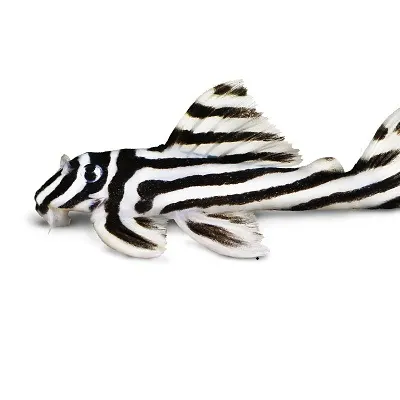
The zebra pleco — Hypancistrus zebra, L046 — was first collected from the Xingu River in the Brazilian state of Pará in the late 1980s. When it appeared in the aquarium trade in the early 1990s, it caused something close to a sensation. Nothing in freshwater fishkeeping looked quite like it: the precise black and white striped pattern, the compact body, the dramatic dorsal fin. Demand was immediate and intense.
For over a decade, wild-caught specimens were the primary source for the hobby. The Xingu River population was subject to significant collection pressure, compounded by the ongoing threat of habitat modification from the Belo Monte hydroelectric dam project. The Xingu is a fast-flowing, warm, oxygen-rich river — exactly the specialised habitat that Hypancistrus zebra requires and cannot easily adapt away from. Population declines became apparent, and in 2004 Brazil prohibited the export of the species.
That export ban could have ended the availability of zebra plecos in the hobby. Instead, it accelerated one of the most successful captive breeding programmes in freshwater fishkeeping. Breeders across Europe, the United States, and Asia who had acquired wild-caught specimens before the ban worked to establish self-sustaining captive populations. Today, every zebra pleco in the hobby is captive-bred — and the captive population is healthy, diverse, and well-maintained by a dedicated community of hobbyists and professional breeders.
This is worth understanding when you buy a zebra pleco. You are not just acquiring a remarkable fish — you are participating in a conservation-relevant captive breeding success. Buying from reputable, established breeders who maintain healthy lineages matters for the long-term genetic health of the captive population.
Appearance and identifying genuine L046
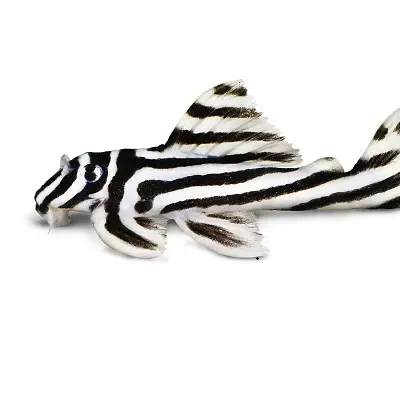
The zebra pleco's pattern consists of alternating black and white stripes that run across the body and continue onto the fins. The stripes are bold, high-contrast, and relatively consistent — not the irregular reticulation of some other Hypancistrus species, but clean, defined bands. The dorsal fin is tall and dramatic when raised. The body is compact and rounded, reaching three to four inches at adult size.
Several other Hypancistrus species have broadly similar black and white patterns, and misidentification — whether innocent or deliberate — does occur in the trade. The most commonly confused species are:
L098 — Similar striping but wider, less precise bands. Generally considered a related but distinct species.
L399 / L400 — More irregular pattern, sometimes sold as "zebra-type" plecos at lower prices.
Hypancistrus contradens — Similar markings, different body proportions.
Buying from established breeders who have maintained verified lineages from known wild-caught founding stock is the most reliable way to ensure you're getting genuine L046. Ask about the lineage. A credible breeder will be able to tell you the history of their stock.
Tank requirements
Tank size
A pair or small group of zebra plecos can be kept in a 20-gallon tank, though 30 gallons is more practical for long-term colony maintenance. The small adult size of this species means tank footprint matters more than volume — a longer, shallower tank with more floor space is preferable to a tall, narrow one. Breeding colonies of multiple pairs typically require larger setups to provide adequate cave space and reduce competition.
Caves and hiding spaces
Cave provision is not optional — it is the central requirement of zebra pleco husbandry. In nature, Hypancistrus zebra lives among rocks and crevices in fast-flowing water. In captivity, it needs caves that closely match the entrance dimensions of its body — tight enough to feel secure, large enough to turn around in. Commercially produced ceramic pleco caves in sizes specifically matched to this species are available and highly effective. Terracotta pots cut to size, sections of slate stacked to create crevices, and purpose-built PVC tube structures also work.
Provide at least one cave per fish, ideally more. Competition for caves drives stress and can suppress breeding. In a breeding setup, the male occupies and defends a specific cave — this is where spawning occurs and where he guards the eggs and fry. Cave quality and placement significantly affect breeding success.
Substrate
Fine sand or smooth small gravel. Zebra plecos aren't heavy diggers but they do move substrate around caves. Avoid sharp-edged substrates that could damage their undersides.
Plants and décor
Plants are not essential but some keepers use them to provide additional cover and improve water quality through nutrient uptake. Hardy species like Anubias and Java fern that attach to hardscape are practical choices — they won't be uprooted since zebra plecos aren't significant diggers. The primary focus of décor should be hardscape that creates structure and additional hiding opportunities.
Water parameters
ParameterTarget rangeNotesTemperature82–86°FCritical — this species needs warm water consistentlypH6.0–7.5Slightly acidic to neutral preferredHardness (GH)2–10 dGHSoft water preferredAmmonia0 ppmZero toleranceNitrite0 ppmZero toleranceNitrateBelow 10 ppm ideallyVery sensitive to elevated nitrates
Temperature is the parameter that most often catches new zebra pleco keepers out. The Xingu River is a warm, equatorial waterway where temperatures consistently run between 82 and 88°F. In the aquarium, a minimum of 80°F is acceptable but 82–86°F is where these fish are genuinely thriving rather than merely surviving. At lower temperatures, activity drops, appetite decreases, immune function is suppressed, and breeding activity typically stops entirely.
This temperature requirement has direct implications for tankmate choice. Many popular community fish are uncomfortable at 82°F+. Cardinal tetras, discus, and some other Amazonian species are comfortable at these temperatures; most community staples like tetras, corydoras, and livebearers are not ideal companions.
Nitrate sensitivity is the other parameter that demands consistent attention. Zebra plecos are significantly more sensitive to elevated nitrates than most tropical fish. Keeping nitrates below 10 ppm requires regular water changes — 30–40% weekly is typical in a well-stocked setup — and careful attention to feeding quantities.
Filtration and flow
The Xingu River is fast-flowing and highly oxygenated. Replicating meaningful current in a home aquarium is important for zebra pleco health and, particularly, for breeding success.
A canister filter with the outlet positioned to create flow across the tank bottom — where the fish spend most of their time — is more effective than a hang-on-back filter that agitates only the surface. Additional powerheads or wave makers can be used to increase bottom-level circulation. The fish should be visibly orienting themselves against the current when flow is adequate.
Sponge filters are commonly used in zebra pleco breeding setups because they provide biological filtration without the risk of sucking up small fry. Many serious breeders run a combination of sponge filters for biological filtration and powerheads for flow, rather than a single canister filter.
Oxygenation matters as much as flow. The Xingu's fast water is highly oxygenated. Surface agitation from filtration, powerheads, or an airstone keeps dissolved oxygen at appropriate levels. Don't seal the surface of the tank with a lid that prevents gas exchange.
Feeding
This is where many new zebra pleco keepers go wrong. Hypancistrus zebra is a carnivore. It does not eat algae in any meaningful quantity, it does not benefit from a vegetable-heavy diet, and it will not maintain condition on algae wafers alone.
What to feed
Bloodworm — frozen or live. One of the most readily accepted foods and highly nutritious. Frozen is safer in terms of disease risk.
Brine shrimp — adult frozen brine shrimp or enriched nauplii. Excellent for fry as well as adults.
Mysis shrimp — highly nutritious, excellent acceptance.
High-protein sinking wafers or pellets — look for formulations with 45%+ protein content. Tetra Pleco Wafers are commonly used but look for higher protein alternatives for long-term feeding.
Repashy gel foods — particularly the carnivore-formulated varieties. These are widely used in the Hypancistrus breeding community with excellent results.
Occasional white mosquito larvae, daphnia, and tubifex — as variety additions.
What not to feed
Algae wafers as a staple. Cucumber and courgette as regular foods. These fish will sometimes nibble vegetable matter but it should not be a significant part of the diet. A carnivore fed primarily plant-based foods will decline slowly — maintaining weight but losing condition, colour, and breeding interest over months.
Feeding logistics
Feed after lights-out. Zebra plecos are predominantly nocturnal and will often ignore food dropped into a brightly lit tank. Evening feeding, or using a dimmer to reduce light before feeding, significantly improves consumption. Remove uneaten food the next morning to avoid fouling the water.
Don't overfeed. Zebra plecos have a relatively slow metabolism compared to active swimming fish. Feeding every other day is adequate for adults; daily feeding for juveniles and breeding fish.
Tankmates
Zebra plecos are peaceful fish with almost no interest in bothering other species. The tankmate challenge is finding fish that share their warm water requirements without outcompeting them for food or disturbing their caves.
Good tankmates include:
Cardinal tetras — comfortable at zebra pleco temperatures, occupy upper water column, don't compete for food
Rummy nose tetras — similar logic
Apistogramma species — small, warm-water dwellers; monitor for cave competition
Corydoras — some warm-water species like C. sterbai work well; they occupy similar space but don't compete for caves
Discus — in larger tanks; share warm-water requirements
Avoid: any fish that will eat the zebra plecos' food before they reach it (fast-moving competitive feeders), any fish that will disturb or block caves, and any aggressive or significantly larger fish that may stress or injure them.
Many serious zebra pleco breeders keep them in species-only tanks. This simplifies feeding, makes it easier to monitor individual fish, and eliminates any risk of interference with breeding behaviour.
Behaviour and activity patterns
New zebra pleco keepers are sometimes alarmed by how rarely they see their fish. This is normal. Hypancistrus zebra is primarily nocturnal — in a typical setup with standard daylight-cycle lighting, the fish will spend most of the day inside caves and become active after lights-out. They're not unwell; they're behaving exactly as they would in the wild.
As they become more comfortable over weeks and months, many individuals become bolder and will emerge during the day — particularly at feeding time. The extent of daytime activity varies by individual. Some fish become quite bold and visible; others remain consistently secretive. Don't judge an individual's health by how often you see it during the day.
Males are territorial around their caves, particularly when in breeding condition. This occasionally leads to low-level conflict between males — displays, chasing — but serious injury between zebra plecos is uncommon compared to more aggressive cichlids. Providing adequate caves eliminates most cave-related conflict.
Health and common problems
Nitrate poisoning
The most common long-term health problem in zebra plecos. Elevated nitrates cause gradual decline — reduced activity, loss of colour, reduced appetite, increased susceptibility to infection. The fish doesn't dramatically crash; it just slowly deteriorates over months. By the time obvious symptoms appear, the situation can be serious. Test nitrates regularly and keep them below 10 ppm.
Bloating and intestinal issues
Typically related to feeding inappropriate foods (too much vegetable matter, low-quality food) or bacterial infection. A fish that is visibly bloated and not eating needs prompt attention — fasting for 24–48 hours and assessment. If the condition persists, treatment with metronidazole addresses the most common bacterial cause.
Velvet (Oodinium)
Velvet disease — a dusty gold sheen over the body — can affect Hypancistrus species. It's treated with copper-based medications, though care is needed with dosing in soft water where copper is more bioavailable. Raise temperature and reduce lighting during treatment.
Temperature shock
Zebra plecos are sensitive to sudden temperature drops. Heater failure in winter can cause rapid decline. Using two smaller heaters rather than one large one provides redundancy — if one fails, the other maintains a survivable temperature until replacement.
Breeding
Breeding zebra plecos is one of the most rewarding challenges in the freshwater hobby. It requires patience and correct conditions, but it is genuinely achievable for a dedicated keeper.
Conditioning breeders
Breeding condition is achieved through excellent water quality, warm temperatures (84–86°F is optimal for breeding activity), and a high-quality varied diet with frequent live or frozen foods. Fish that are fed primarily dried foods and kept at lower temperatures rarely breed reliably.
The spawning process
The male selects and defends a cave. When a female enters and is accepted, spawning occurs inside the cave — you typically won't see it happen. The female deposits eggs (usually 10–20 per clutch, occasionally more) on the cave ceiling or walls, the male fertilises them, and then guards them aggressively while the female is expelled from the cave.
The male fans the eggs continuously to oxygenate them. This is where good water flow in the tank pays dividends — low oxygen environments cause egg mortality. Eggs are relatively large and yellow-orange in colour. They hatch in five to seven days at 84°F.
Fry care
Newly hatched fry carry a large yolk sac for the first week and don't need feeding during this period. The male continues to guard them in the cave. Once the yolk sac is absorbed and the fry are free-swimming, they can be fed baby brine shrimp (newly hatched), micro worms, and finely powdered high-protein fry food.
Many breeders remove fry to a separate rearing tank at the free-swimming stage to improve survival rates and make feeding management easier. A bare-bottom rearing tank with a sponge filter, high flow, and warm water is the standard setup.
Fry grow slowly. At six months they're typically 1–1.5 inches. Adult size and colour pattern develop over 18–24 months. Patience is essential.
Sourcing captive-bred stock
All zebra plecos available today are captive-bred. This is both a legal reality (Brazilian export ban) and, genuinely, good news — captive-bred zebra plecos are well-adapted to aquarium conditions, have known histories, and come from breeders who have invested significant effort in maintaining healthy lineages.
Buy from breeders who can discuss their lineage. Ask when their founding stock was acquired, how many generations they've bred through, and what parameters they're kept in. A breeder who answers these questions readily and with specificity is someone who knows their fish.
Avoid very cheap zebra plecos from unknown sources. The market price for genuine captive-bred L046 reflects the genuine cost and difficulty of breeding them. A zebra pleco priced significantly below market rate is either misidentified or comes from a source you should be cautious about.
Specialist aquatics marketplaces, dedicated pleco forums, and the zebra pleco breeding community on social media are the primary routes to finding reputable sellers. Taking the time to research and buy from the right source is the most important single decision you'll make in keeping this species.
_400.webp)