Search AquaLots
Find fish, plants, invertebrates and equipment
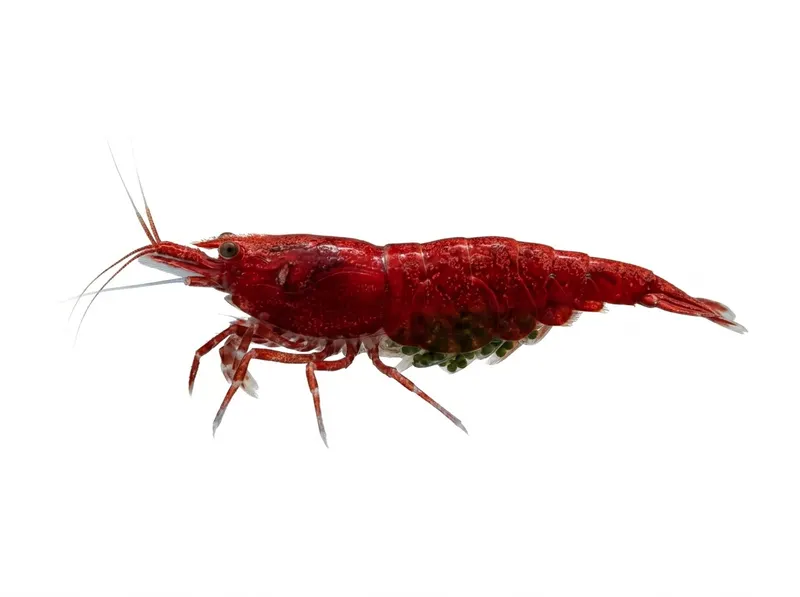
Freshwater Shrimp Care Guide: Neocaridina and Caridina for Beginners
6 April 2026
Freshwater shrimp are one of the fastest-growing segments of the aquarium hobby — and for good reason. They're fascinating to watch, genuinely useful in planted tanks, breed readily, and come in an extraordinary range of colours. Here's everything you need to get started.
In this guide
Why keep freshwater shrimp?
The appeal of freshwater shrimp is easier to understand once you've watched a colony of them in action. They're perpetually busy — constantly grazing surfaces, processing leaf litter, picking through substrate — in a way that makes a shrimp tank feel genuinely alive even when nothing dramatic is happening. They're also highly social: shrimp kept in groups behave very differently to isolated individuals, and a colony of twenty or thirty shrimp creates a sense of movement and activity that's disproportionate to their size.
The practical benefits are real too. Shrimp graze algae from plant leaves, glass, and substrate, doing useful work in planted tanks without the bioload of a comparable fish population. They process decaying plant matter and contribute to the breakdown of organic waste. In a lightly stocked, well-planted tank, a shrimp colony functions almost as a cleanup crew — a visible and attractive one.
For breeders and hobbyists interested in genetics, the colour variety hobby within Neocaridina shrimp is one of the most active and creative communities in fishkeeping. New colour forms, patterns, and grades are developed and refined by dedicated breeders, and the collector market for high-grade specimens is genuinely active and internationally connected.
Neocaridina vs Caridina
The two genera that dominate freshwater shrimp keeping are Neocaridina and Caridina. Understanding the difference is the first practical decision in shrimp keeping.
Neocaridina
Neocaridina davidi and related species are the beginner shrimp. They're hardy, adaptable to a wide range of water parameters, breed readily, and are available in an enormous range of colours at accessible prices. The cherry shrimp — red variants of N. davidi — are the most widely kept freshwater shrimp in the hobby worldwide. Neocaridina thrive in neutral to slightly alkaline water and tolerate moderate hardness. Standard tap water in most regions is entirely suitable without modification.
Caridina
Caridina species — including the crystal red shrimp, bee shrimp, and tiger shrimp — are the specialist end of the market. They require soft, acidic water (most need pH 6.0–6.8 and very low mineral content), are more sensitive to parameter fluctuations, and are more demanding to breed reliably. They're not impossibly difficult, but they require a different approach — typically RO water with remineralisation, specialist substrate, and more careful monitoring. The payoff is extraordinary colours and the satisfaction of breeding more demanding animals.
The key rule
Never mix Neocaridina and Caridina in the same tank. Their water requirements are incompatible — conditions ideal for Neocaridina are poorly suited to most Caridina, and vice versa. More importantly, many will interbreed, producing offspring of muddied colour and compromised genetic lines. Keep the genera in separate tanks.
Popular Neocaridina species
Cherry shrimp (Red cherry shrimp)
Neocaridina davidi — red variant
StatValueAdult size1–1.5 inchesTemperature65–80°FpH6.5–8.0DifficultyBeginnerGradeSakura to painted fire red
The cherry shrimp is the definitive entry point into freshwater shrimp keeping. Its red colouration varies considerably by grade — from the pale, partially coloured "cherry" grade through "sakura" (solid red with some translucency) to "painted fire red" (deep, opaque red colouration on both males and females). Higher-grade shrimp are significantly more expensive but the colour difference is visually dramatic.
Males are smaller and less intensely coloured than females — a common pattern across Neocaridina. When females are berried (carrying eggs under the abdomen, visibly greenish-orange through the red body), they can be identified easily and it's one of the most satisfying sights in shrimp keeping.
Blue velvet shrimp
A blue colour variant of N. davidi. Same care requirements as cherry shrimp. The colouration ranges from pale blue-grey to deep, vivid blue in high-grade specimens. Males are typically lighter in colour than females. Blue velvets kept with cherry shrimp will interbreed and produce mixed-colour offspring — keep colour variants in separate tanks if maintaining line purity matters.
Yellow neon shrimp
A bright yellow variant, also N. davidi. The yellow colouration shows particularly well against dark substrate and in well-lit planted tanks. Care is identical to other Neocaridina variants.
Black rose / Bloody Mary shrimp
Dark red to black colouration variants. The "Bloody Mary" name is used for a particularly deep, opaque dark red form; "black rose" refers to specimens with predominantly dark to near-black bodies. Both are the same species with the same care requirements.
Popular Caridina species
Crystal red shrimp (CRS)
Caridina cantonensis — red/white variant
StatValueAdult size1–1.2 inchesTemperature68–76°FpH5.8–6.8TDS100–150 ppmDifficultyIntermediate
Crystal red shrimp are one of the most popular Caridina varieties, characterised by bands of white and red across the body. The grading system (S, SS, SSS, and various named grades) reflects the proportion of white to red colouration — higher grades have more white, greater opacity, and more consistent patterning. High-grade CRS are among the most valuable shrimp in the hobby.
They require soft, acidic water — pH 6.0–6.8, TDS 100–150 ppm — achieved through RO water remineralised with a Caridina-specific mineral supplement (not the same products used for Neocaridina). Active buffering substrate (ADA Aqua Soil, Fluval Stratum, and similar) helps maintain the low pH these shrimp need and provides some buffering capacity.
Tiger shrimp
Caridina mariae — various colour forms
Tiger shrimp are characterised by vertical striping across the body, available in orange, black, and blue variants. They have similar care requirements to crystal shrimp but are generally considered slightly hardier. Orange-eye blue tiger shrimp are particularly popular in the collector market.
Bee shrimp
Caridina cantonensis — black/white variant
The black and white equivalent of crystal red shrimp. Same care requirements, same grading system, same level of difficulty. Black bee shrimp with high white coverage are visually striking and command strong prices at higher grades.
Tank setup
Tank size
Shrimp can be kept in very small tanks — a 10-gallon tank is a perfectly functional shrimp colony setup. Smaller nano tanks (5 gallons or less) are possible but more difficult to maintain stable water parameters in, which matters more for Caridina than Neocaridina. Larger tanks (20+ gallons) provide more stable conditions and support larger, more visually impressive colonies.
Shrimp-only setups are popular because they can be done in modest tank sizes, but shrimp also work excellently in planted community tanks provided tankmate selection is appropriate (see below).
Substrate
For Neocaridina: inert substrate (sand, plain gravel) is fine. A dark substrate shows off their colours better and is gentler on the eyes of the shrimp. Specific shrimp substrate is beneficial but not required.
For Caridina: active buffering substrate is strongly recommended. Products like ADA Aqua Soil, Fluval Stratum, and similar porous plant substrates actively buffer pH downward and maintain the soft, acidic conditions Caridina require. They exhaust over 12–18 months and need eventual replacement — factor this into your setup planning.
Filtration
Sponge filters are the standard for shrimp tanks and genuinely the best choice. They provide reliable biological filtration with zero risk of shrimp or shrimplets being sucked in. The sponge surface also provides grazing area — shrimp pick constantly at the biofilm that colonises sponge filter surfaces. Internal filters with a sponge pre-filter guard are the alternative if stronger flow is needed.
Avoid powerful external canister filters without fine pre-filter guards — baby shrimp (shrimplets) are tiny and will be sucked into any unguarded intake. Even full-size shrimp can be drawn into powerful unguarded intakes.
Plants and hiding
Dense planting is genuinely beneficial in shrimp tanks. Plants provide grazing surfaces, hiding spots for moulting shrimp (when they're most vulnerable), and refuge for shrimplets. Java moss is particularly popular — its fine structure provides excellent cover for baby shrimp and supports biofilm growth that shrimplets feed on. Anubias, java fern, and floating plants all work well.
Leaf litter — Indian almond leaves, oak leaves, dried banana leaves — provides excellent grazing material, introduces tannins that benefit particularly Caridina setups, and creates natural-looking habitat. Add a few leaves every few weeks as they decompose.
Water parameters
Neocaridina
ParameterTarget rangeTemperature65–78°FpH6.8–7.8GH (hardness)6–10 dGHKH (alkalinity)2–6 dKHTDS150–250 ppmAmmonia/Nitrite0 ppmNitrateBelow 20 ppm
Caridina
ParameterTarget rangeTemperature68–76°FpH5.8–6.8GH (hardness)4–6 dGHKH (alkalinity)0–1 dKH (near zero)TDS100–150 ppmAmmonia/Nitrite0 ppmNitrateBelow 10 ppm
Water parameter stability is more important than hitting exact values. Shrimp are sensitive to sudden parameter shifts — more so than most fish. Consistent, stable conditions within the appropriate range produce better outcomes than parameters that technically average correctly but fluctuate significantly. This is particularly true for Caridina, where parameter shifts can trigger mass moulting (which leads to failed moults and deaths) or breeding suppression.
Copper is acutely toxic to shrimp at concentrations that are harmless to fish. Never use copper-based medications in a shrimp tank. Check the ingredient list of any liquid fertiliser before use — some contain copper. Some tap water supplies add copper to pipes; testing for copper is worthwhile if you're having unexplained shrimp deaths in an otherwise well-maintained tank.
Feeding
Shrimp are omnivores and opportunistic grazers. In a planted tank with biofilm, algae, and decaying plant matter, a shrimp colony can sustain itself with minimal supplemental feeding. In a sparse, heavily cleaned setup they need more. Most keepers land somewhere between the extremes.
Staple foods
Shrimp-specific granules or pellets — formulated for shrimp with appropriate protein and mineral content
Blanched vegetables — spinach, kale, courgette, sweet potato. Blanch briefly to soften, cool, and weight to the bottom. Remove after 24 hours.
Snowflake food — dried soya husks that hydrate in the tank, providing a long-lasting grazing food that doesn't foul the water
Leaf litter — Indian almond leaves, mulberry leaves. Shrimp graze on the biofilm that develops on decomposing leaves rather than the leaf itself
Supplements
Mineral-rich foods — foods containing calcium and magnesium support healthy moulting. Some shrimp-specific foods include mineral supplements; cuttlebone placed in the tank provides a long-term calcium source
Protein foods — occasional frozen daphnia, micro worms, or specialist shrimp protein foods provide variety and conditioning benefit
Feeding frequency
Don't overfeed shrimp. They're small, they need less food than it seems, and uneaten food fouls water quality rapidly. Two to three small feedings per week is adequate for most established colonies. Remove any uneaten food within 24 hours. A colony that's eating everything offered within a few hours is ready for slightly more; food sitting uneaten after 24 hours means you're overfeeding.
Tankmates
Shrimp tankmate selection requires more care than most fish community planning. The problem is straightforward: shrimp are small, move slowly (except in short bursts), and are valuable food for many fish. Adult shrimp have reasonable survival rates with appropriate tankmates; shrimplets are essentially food for any fish that can fit them in its mouth.
Safe tankmates
Otocinclus catfish — small, peaceful algae eaters that ignore shrimp
Corydoras — bottom feeders that generally leave adult shrimp alone; some predation of shrimplets is possible
Small peaceful rasboras (chili rasboras, exclamation rasboras) — primarily mid-water fish, minimal shrimp predation
Celestial pearl danios — may take shrimplets but leave adults alone
Bristlenose plecos — armoured, algae-focused, and generally ignore shrimp
Snails — Malaysian trumpet snails, nerites, mystery snails — all safe with shrimp
Risky or unsuitable tankmates
Most tetras (will eat shrimplets, harass adults)
Cichlids of any kind
Bettas (variable — some ignore shrimp, others hunt them relentlessly)
Gouramis (generally shrimp predators)
Loaches (predatory toward shrimp)
Any fish large enough to eat an adult shrimp
For breeding colonies where shrimplet survival is important, species-only tanks or tanks with only the safest companions produce the best results. If community compatibility matters more than maximum breeding output, choose larger, bolder Neocaridina (which breed faster and tolerate some predation losses) rather than valuable Caridina.
Breeding
One of the most appealing aspects of freshwater shrimp is how readily they breed in good conditions — particularly Neocaridina. A healthy colony in appropriate water will reproduce continuously without deliberate intervention.
The breeding process
Females become sexually mature at roughly three to five months. When ready to breed, a female moults and releases pheromones that cause males to swarm in what hobbyists call a "swimming party" — males frantically searching for the female. The female is found and fertilised, and she then carries eggs under her abdomen for 20–30 days (shorter at higher temperatures, longer at lower temperatures). The eggs are visible as a cluster of green-brown ovals, and the female fans them constantly to oxygenate them.
Shrimplets emerge at miniature adult form — fully formed, capable of independent feeding, and extraordinarily small. They immediately begin grazing surfaces and feeding on biofilm. Survival in a well-planted tank with appropriate water quality and no predators is very high.
Breeding optimisation
Maintain stable, optimal water parameters — parameter fluctuations suppress breeding and can cause failed moults
Ensure adequate mineral content (GH) for successful moulting
Keep nitrates low — below 10 ppm ideally for optimal breeding rates
Provide dense planting and leaf litter for shrimplet shelter and grazing
Don't overclean — biofilm on surfaces is the primary food source for shrimplets
Health and common problems
Failed moults
Shrimp moult regularly as they grow. A failed moult — where the shrimp gets stuck in the old exoskeleton — is typically caused by mineral deficiency (insufficient GH/calcium), parameter instability, or copper toxicity. Address by checking GH, reviewing water parameter stability, and testing for copper.
Bacterial infection
Bacterial infections in shrimp often present as a cloudy or opaque appearance in the body, pink patches, or sluggish behaviour. Water quality improvement and isolation of affected individuals is the first response. Shrimp are sensitive to many medications — research carefully before using any treatment in a shrimp tank.
Vorticella and other parasites
Vorticella is a protozoan parasite that presents as white fuzzy patches on shrimp — usually on the rostrum or appendages. It's more common in tanks with poorer water quality and can be treated with salt baths or proprietary treatments. Address water quality as the underlying cause.
Sudden death (parameter shock)
Shrimp are significantly more sensitive to water parameter changes than fish. Sudden deaths across multiple shrimp simultaneously often indicate a parameter shift — a large water change with significantly different parameters, copper introduction, medication, or equipment failure. Test all parameters immediately when unexplained deaths occur.
Sourcing shrimp
General fish shops carry cherry shrimp and occasionally other Neocaridina variants, but the quality of stock — and particularly the grading — in general retail is often poor. For high-grade Neocaridina and virtually all Caridina varieties, specialist shrimp breeders are the reliable source.
Aquatics marketplaces are one of the primary routes to finding specialist shrimp breeders. The shrimp collector community is active, well-organised, and relatively generous with knowledge — finding breeders who maintain specific grades, species, and colour lines is straightforward through dedicated groups and marketplaces.
When buying, ask about the water parameters the shrimp have been kept in. Acclimating shrimp from significantly different parameters requires more care than standard fish acclimation — a drip acclimatation over 60–90 minutes is standard for Caridina particularly. Quarantine new shrimp for at least two weeks before introducing to an established colony.