Search AquaLots
Find fish, plants, invertebrates and equipment
How to Make Money from Fish Keeping
1 April 2026
Can You Actually Make Money From Fish Keeping?
The short answer is yes — and more people are doing it than you might think. What started as a hobby for most aquarists has, for thousands of people across the UK, quietly become a genuine side income. Some make a few hundred pounds a year selling surplus stock. Others have built full breeding operations generating thousands of pounds annually from their spare room or garden shed.
The fish keeping hobby sits in an unusual position. Unlike most hobbies that simply cost money, it produces something — living animals that other hobbyists want to buy. Every time your fish breed, you have stock. Every time that stock finds a buyer, you have income. The question is not really whether you can make money from fish keeping. It is how to set yourself up to do it properly.
This guide covers the species worth breeding, what the realistic numbers look like, how the platform side works on AquaLots, and how to go from hobbyist to someone who genuinely offsets — or exceeds — the cost of the hobby.
Why Fish Keeping Is One of the Best Hobby Side Incomes Available
Most hobbies are purely a cost. A car enthusiast spends money on parts, tools and track days. A golfer pays for rounds, clubs and lessons. A fish keeper can do the same — but they can also breed their stock and sell the offspring to fund everything else. The hobby pays for itself, and with the right species and approach, it pays considerably more than that.
The economics are simple. Fish breed prolifically. A single pair of quality neocaridina shrimp can produce hundreds of offspring in a year. A breeding pair of L-number plecos might produce two or three spawns annually, each with 20 to 40 fry. A colony of high-grade discus breeds every few weeks. In every case, the offspring cost you very little beyond the water, food, and electricity to raise them — but they sell for real money to buyers who want quality stock without the wholesale markup of a pet shop.
Online marketplaces like AquaLots have transformed what is possible for hobbyist sellers. Ten years ago, your market was your local area — the fish shop that might give you store credit, or a few people on a forum who lived nearby. Today, your market is every fish keeper in the UK. That changes the economics entirely.
The Species Worth Breeding for Profit
Not all fish are equal when it comes to profit potential. The best species to breed for income share a few characteristics: they are in consistent demand, they are not mass-produced by wholesalers, they breed reliably in captivity, and the offspring can be raised to sellable size without enormous resources.
Neocaridina Shrimp
Neocaridina shrimp — the group that includes Red Cherry Shrimp, Blue Velvet, Yellow Neon, and dozens of other colour variants — are arguably the single best species for hobbyist breeding income. They are easy to keep, breed constantly in the right conditions, and the market for quality, high-grade specimens is strong and growing.
A high-grade Blue Velvet or Red Cherry Shrimp sells for between £1.50 and £4.00 per shrimp depending on grade and quantity. A 10-shrimp starter pack from a quality breeder sells for £15 to £30 on AquaLots. A colony of 50 breeding adults in a well-maintained tank produces several hundred offspring per month. The maths speaks for itself. Setup cost is minimal — a 30 to 60 litre tank, a gentle sponge filter, and some plants. Monthly costs are near zero beyond electricity.
The key to commanding premium prices for shrimp is grade. Standard Red Cherries sell for pence each to wholesalers. High-grade painted fire reds or sakura grade specimens in consistent, clean colour sell for multiples of that to hobbyists. Grade comes from selective breeding over generations — something hobbyists can absolutely achieve and that wholesalers rarely bother with.
Caridina Shrimp
Crystal Red Shrimp, Black King Kong, and Taiwan Bee variants occupy the premium end of the shrimp market. High-grade CRS sell for £5 to £20 per shrimp. A single high-quality Taiwan Bee can sell for £30 to £50. These require more specific water conditions — soft, slightly acidic water — but for breeders who get it right, the return is significantly higher than neocaridina.
This is a species where the learning curve is steeper but the ceiling is also much higher. Established caridina breeders with a reputation for quality sell entire spawns before they have even finished raising them.
L-Number Plecos
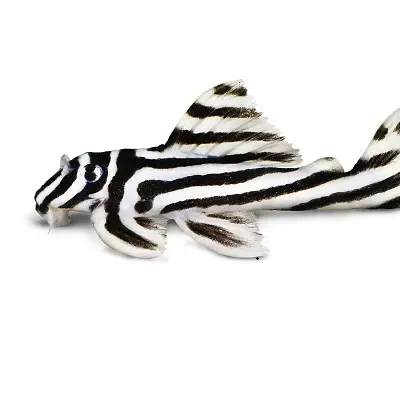
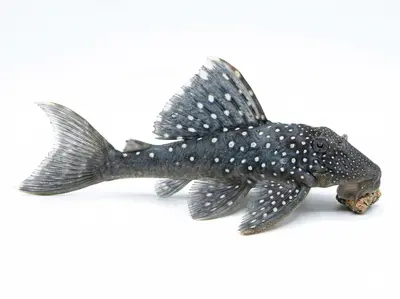
The L-number pleco community is passionate and well-funded. Hobbyists who collect and breed plecos think nothing of paying £40, £80 or more for quality specimens of sought-after variants. Common Bristlenose Plecos sell for modest amounts — a few pounds each — but the interesting money is in rarer variants: Albino Bristlenose, Longfin varieties, L104 Clown Plecos, L134 Leopard Frog Plecos, and the truly premium end like L066 King Tiger Plecos or L046 Zebra Plecos.
Plecos are cave spawners and relatively easy to breed with the right cave structures and conditioning. A spawn of 30 to 50 fry raised to sellable size represents real income. A single L046 Zebra Pleco can sell for over £100. A breeding pair — proven — is worth several hundred pounds on AquaLots.
Discus
Discus are the premium fish of the freshwater hobby. Quality wild-type or F1 discus command prices of £40 to £150 per fish. A breeding pair can produce spawns every two to four weeks in the right conditions. Raising the fry requires commitment — discus parents feed their young on skin mucus, which makes the first weeks intensive — but the financial reward for successful breeders is substantial.
This is not a beginner species, but for experienced fish keepers who already keep discus, breeding them is a natural next step. The demand for quality, UK-bred discus — particularly from breeders who can document their strains — far outpaces supply from hobbyist sources.
Livebearers — Guppies, Endlers, Platies
Common livebearers like guppies sound unglamorous as a breeding project, but the market for quality strains is real. Pet shop grade guppies sell for next to nothing. Show-quality Moscow Blues, Dumbo Ear Reds, or Endler's Livebearers from a documented lineage sell for £3 to £8 per fish in pairs or trios to serious collectors. They breed constantly, they are easy to keep, and a single 60 litre breeding tank produces dozens of sellable young per month.
For beginners wanting to test the water — no pun intended — a quality livebearer strain is a low-risk starting point that generates consistent, if modest, income while you develop your understanding of the selling side.
Aquatic Plants
Plants are often overlooked as a revenue stream but deserve attention. Unlike fish, they produce no waste, require minimal space, and propagate themselves. A healthy colony of Java Moss, Anubias, or Bucephalandra divides constantly. High-demand stem plants like Monte Carlo or Staurogyne repens can be trimmed and sold on a weekly basis.
The premium plant market — particularly rare Bucephalandra varieties, unusual Anubias mutations, and in-demand moss variants — commands surprisingly high prices. A portion of a desirable Bucephalandra variant sells for £10 to £30 on AquaLots. Tissue culture plants sold from propagation setups can generate consistent income with very low running costs.
What Are the Realistic Numbers?
Let us look at what a hobbyist breeder running a small setup might realistically generate on AquaLots.
Small shrimp setup — two 40 litre tanks, one neocaridina colony, one caridina colony: A healthy neocaridina colony produces 50 to 100 sellable young per month. At £20 for a pack of 10, that is £100 to £200 per month gross from one tank. The caridina tank produces fewer offspring but at higher prices — 20 to 30 fry per month at £5 to £8 each is £100 to £240 per month. Total from two small tanks: £200 to £400 per month. Subtract electricity, food, and packaging — you are looking at £150 to £350 per month net from a setup that fits on a shelf in a spare room.
Pleco breeding — a dedicated fish room with six breeding setups: Running six L-number pleco breeding tanks, producing modest yields of 20 to 30 fry per spawn at average prices of £15 to £25 per fish, a serious hobbyist can generate £1,500 to £3,000+ per month from a spare bedroom. The setup cost is higher — tanks, filtration, heating, caves — but the income scales accordingly.
These figures are real. They are what experienced hobbyists already generate selling through AquaLots and similar platforms. They are not guaranteed — building a breeding operation takes time, knowledge, and some trial and error. But for fish keepers who already have the knowledge and the passion, the income potential is genuine.
The £1,000 Trading Allowance and When You Need a Licence
Before going further, it is important to understand the legal framework for selling fish in the UK. The rules are straightforward once you know them.
HMRC provides every individual with a £1,000 annual trading allowance. If your gross income from selling — not profit, gross income — stays below £1,000 in a tax year, you do not need to report it to HMRC or pay tax on it. For casual hobbyists selling occasional surplus stock, this covers most situations.
Above £1,000 gross, you need to register for Self Assessment with HMRC and declare your trading income. This does not mean you pay tax on the full amount — you pay tax on profit after deducting legitimate business expenses (equipment, packaging, electricity, feed). Many small breeders generating £3,000 to £5,000 gross have very modest tax bills once expenses are accounted for.
Separately, the Animal Welfare (Licensing of Activities Involving Animals) (England) Regulations 2018 requires anyone selling animals "in the course of a business" to hold an Animal Activities Licence from their local council. Genuine hobbyists selling surplus offspring below £1,000 per year are generally exempt. Commercial sellers — those buying stock to resell, selling regularly, or generating significant income — need a licence. The full breakdown of who needs a licence and how to apply is covered in the AquaLots Seller Guide.
The legal framework is not a barrier to entry — it is a reasonable set of rules that protects animals and keeps the hobby legitimate. Understanding it from the start means you can scale your selling with confidence.
How Selling on AquaLots Works
AquaLots is built specifically for the aquatic hobby. Unlike general classifieds or social media groups, it provides a proper marketplace infrastructure — secure payments, buyer and seller protection, messaging, feedback, and a growing community of buyers actively looking for quality livestock.
Getting set up takes about ten minutes. You create a free account, verify your email, complete your profile, and connect your bank account through Stripe — the payment processor AquaLots uses to handle all transactions. Once that is done, you can create listings immediately. There are no upfront listing fees. AquaLots charges a small percentage of the final sale price when something sells — you only pay when you make money.
Listings can be auctions — where buyers bid against each other — or fixed-price Buy It Now. Auctions work particularly well for high-demand or rare stock where competitive bidding can push the final price well above your starting point. Buy It Now suits common species or repeat sellers who know their market price. Most successful sellers on AquaLots use both, depending on what they are listing.
The platform surfaces listings on the homepage in sections like Ending Soon, Most Active and Top Deals — giving well-presented listings exposure to all visitors, not just people browsing a specific category. A listing with good photos, a clear title and a competitive starting price gets that homepage exposure. A thin listing with a blurry photo rarely does.
The full detail on creating listings that perform — titles, photos, descriptions, pricing, tags, timing — is in the AquaLots Seller Guide, which is worth reading before you create your first listing.
Building a Reputation That Generates More Income Over Time
The single most valuable thing you can build as a seller on AquaLots is reputation. Buyers leave feedback after every transaction, and that feedback is visible on your profile to every future buyer. A seller with 50 five-star transactions commands higher prices than a new seller with no history — even if the fish are identical.
This is not a barrier. It is an opportunity. Every seller starts from zero. The sellers who build strong reputations quickly do so by doing the obvious things consistently: describing their fish accurately, packaging them carefully, dispatching promptly, and communicating clearly when anything changes. None of that requires experience — it just requires giving a genuine effort.
Once your reputation is established, the flywheel turns in your favour. Buyers who had a good experience come back. They recommend you to other hobbyists. Your listings attract more bids because buyers can see your track record. Your prices move up as confidence in your stock grows. The first few transactions are the hardest — after that, the business builds on itself.
The Real Upside — It Funds the Hobby Entirely
For most fish keepers who start selling on AquaLots, the initial goal is not to build a business. It is to stop the hobby costing so much. A breeding operation that generates £200 to £400 per month covers electricity, food, equipment upgrades, and new stock — easily. At that point the hobby costs nothing. Every tank upgrade, every new species you want to try, every piece of equipment you have been putting off — it is all funded by the fish you are already keeping.
Many sellers then find themselves scaling up not because they set out to build a fish business, but because they enjoyed the selling side, had a good response from buyers, and found themselves reinvesting naturally. A one-tank shrimp setup becomes two tanks. Two becomes four. Four becomes a dedicated fish room. It happens gradually, driven by interest and early success rather than a business plan.
If your aim is simply to offset the cost of the hobby, AquaLots provides the infrastructure to do that from your very first sale. If your aim is to build something larger, the platform scales with you. Either way, the starting point is the same — set up your account, breed quality stock, present it well, and let the buyers come to you.
Getting Started
The best time to start is before you have anything to sell. Set up your AquaLots account now, complete your profile, and connect Stripe so you are ready to list the moment you have stock. Read the Seller Guide to understand how listings work, what makes a listing perform well, and how the legal side applies to your situation.
Then choose your first species. If you are already keeping shrimp, start there. If you have a breeding pair of plecos, start there. The best species to begin with is whichever one you already have and already understand. Knowledge of your livestock is what separates a successful seller from one who struggles — and as a fish keeper, you already have that knowledge. You just need to put it to work.