Search AquaLots
Find fish, plants, invertebrates and equipment
How to Package and Ship Live Fish Safely: The Complete Guide
4 April 2026
Shipping live fish successfully comes down to preparation, the right materials, and understanding what the fish will experience between your tank and the buyer's door. Get it right and it's straightforward. Get it wrong and you're dealing with DOA claims and unhappy buyers. Here's what you need to know.
In this guide
Why packaging quality matters so much
Every live fish shipment is a small life-support system in a cardboard box. The fish inside has no access to filtration, no oxygen replenishment beyond what you've provided, and no protection from temperature extremes beyond the insulation you've packed. Over the course of a next-day delivery, conditions inside that bag will gradually deteriorate — ammonia will rise, oxygen will be consumed, temperature will drift toward ambient. Good packing slows all of this down enough that the fish arrives healthy. Poor packing accelerates it.
The good news is that the variables are all controllable. The most common causes of transit losses — ammonia spikes, temperature failure, bag leaks, delayed delivery — are almost all preventable with proper preparation. Most DOA claims in the hobby trace back to a small number of avoidable mistakes: fish fed too recently before packing, air used instead of oxygen, heat packs placed directly against bags, or the wrong courier used for time-sensitive live cargo.
This guide covers what to do — and what not to do — at every step of the process.
Choosing the right courier
Courier choice is one of the most consequential decisions you'll make as a fish seller, and one where false economies cause real harm. Live fish require a guaranteed next-day service. Standard or economy delivery is never acceptable — even a short delay in transit can be fatal.
Couriers used by the UK fishkeeping community
APC Overnight is the most widely used option in the hobby. Reliable next-day delivery, accepted at most drop-off points, and a well-established track record in the fishkeeping community. Book directly or through a reseller such as Interparcel or Parcel2Go for better rates.
DPD is used by many commercial aquatics retailers and offers the genuine advantage of one-hour delivery slot notifications, which makes it significantly easier for buyers to ensure they're home. Good live tracking throughout the delivery window. Check their current terms for live animal acceptance at your nearest drop-off point before booking.
UPS and DHL can accept live fish but policies differ by depot and are less consistent. Less commonly used in the hobby as a result. Always confirm with your local depot before booking if you go this route.
What to avoid
Do not use Evri (formerly Hermes) — they have no live animal service and a well-documented poor record with fragile items. Do not use any economy or 2–5 day service for live cargo under any circumstances.
Critically: do not use Royal Mail for live fish. It is prohibited under their terms and conditions and potential liability under the Animal Welfare Act is real. Royal Mail does permit fish eggs and fry via Special Delivery in some circumstances, but their policies can change — always check current terms before using this route for anything.
Booking tips
Book a pre-12 or pre-10 guaranteed next-day service wherever possible
Book early enough that the parcel is collected the same day
Confirm the buyer will be home before you book — once a parcel is with the courier, redirecting it is difficult and extends transit time dangerously
Keep your tracking number — you will need it if anything goes wrong
When to ship — and when not to
When you ship matters almost as much as how you pack. A significant proportion of transit losses are timing failures, not packaging failures.
Best days to ship
Monday to Wednesday is the standard recommendation in the hobby. Parcels shipped on these days arrive Tuesday to Thursday — within the working week with no risk of sitting in a depot over a weekend. Avoid shipping on Thursday or Friday. A Friday delivery that goes slightly wrong — buyer not home, driver can't complete delivery, parcel held at a collection point — means the fish sits over a weekend. That outcome is almost always fatal.
Never ship before a bank holiday. A parcel that misses its pre-bank-holiday delivery window may not reach the buyer for three or four days. The same logic applies with greater force.
Check the forecast
Check the weather at both your location and the buyer's before packing. Shipping during a cold snap or heatwave significantly increases risk even with excellent packaging. Delaying by a day or two for a better weather window is always preferable to shipping into extreme conditions. A message to the buyer explaining the delay costs you nothing and may save the fish.
Confirm before you pack
Always confirm the buyer will be home on delivery day before you start packing and booking. Once a parcel is with the courier your options for intervention are very limited. A buyer who is unexpectedly out and has their parcel redirected to a collection point for pickup the following day has substantially extended the transit time for live animals — often with fatal consequences. This confirmation step is simple and prevents a significant proportion of avoidable losses.
Preparing your fish before packing
What you do in the 24 to 48 hours before shipping is as important as the packing itself.
Stop feeding 24 to 48 hours before shipping
This is the single most important preparation step and the most commonly skipped. Fish excrete ammonia continuously, and the rate increases significantly after feeding as food is digested. In the confined water volume of a shipping bag, ammonia accumulates rapidly — it is the primary cause of live arrival failures in otherwise well-packed shipments. An empty gut means dramatically less ammonia in the bag during transit. Do not skip this step.
Check fish health before packing
If you have any doubt about a fish's health — lethargy, unusual swimming, visible signs of disease, loss of colour, clamped fins — do not ship it. A fish that is stressed or unwell before packing is extremely unlikely to survive transit. Contact the buyer, explain the situation, and arrange a delay. No reputable seller ships a fish they have doubts about.
Have everything ready before catching the fish
Have all your bags, oxygen, and box ready before you start. Chasing fish around a tank for twenty minutes before packing is an avoidable stress event. The time between catching a fish and sealing it in a correctly prepared bag should be as short as possible.
What you need
Fish bags — polythene bags designed for fish shipping, not food bags or ziplock bags
Rubber bands or bag clips
Oxygen cylinder with regulator — or a clean air pump for very short same-day journeys only
Polystyrene box with lid — purpose-made or DIY-lined cardboard
Heat pack — 24-hour or 40-hour depending on conditions
Newspaper or bubble wrap for padding and the essential heat pack buffer
Brown parcel tape — applied generously
Permanent marker for labelling bags
Outer cardboard box — the polystyrene goes inside this for protection
Packing fish step by step
Use the right bag size. The bag should hold roughly one third water to two thirds oxygen by volume. This ratio looks surprising if you haven't seen it, but it's correct — the large oxygen headspace is what keeps the fish alive over the journey. Too much water leaves insufficient oxygen, adds unnecessary weight, and accelerates temperature loss.
Catch the fish quickly and transfer it to the bag with minimum stress.
Seal with oxygen, not air. See the oxygen section below for why this matters so much.
Double band or clip the bag tightly. Give it a gentle but firm squeeze to check for leaks before it goes anywhere near the box. Bag seal failure is one of the most common and most preventable causes of DOA.
Double bag, always. The inner bag holds the fish; the outer bag is secondary containment if the inner fails. The cost and weight are negligible; the insurance is real.
Label each outer bag clearly with species and quantity in permanent marker.
Lay bags flat in the box — fish are less stressed on their side than standing vertically, and flat bags are more stable in transit.
Wrap each bag in newspaper to prevent sliding and provide a small amount of additional insulation between bags.
Add the heat pack correctly as described in the heat pack section.
Seal the polystyrene lid with tape, place inside the outer cardboard box, and tape all edges thoroughly.
Oxygen vs air
The difference between sealing a bag with pure oxygen and sealing it with air is not a minor detail — it is one of the most significant factors in whether fish survive a shipping journey.
Air is approximately 21% oxygen. A bag sealed with air has a limited oxygen reserve that depletes as the fish breathes and as biological processes in the water consume it. For a very short same-day journey, air may be adequate. For a next-day postal delivery — twelve to eighteen hours under normal conditions — air is not sufficient for most species, particularly larger fish or any situation with multiple fish sharing a bag.
Pure oxygen fills the bag headspace at close to 100%, giving the fish a vastly larger reserve to draw on throughout the journey. A small oxygen cylinder suitable for fish shipping costs around £15 to £25 and lasts hundreds of bags — the per-bag cost is negligible relative to the value of most fish being shipped. If you are selling fish regularly, an oxygen cylinder is standard equipment, not optional.
If you genuinely cannot access oxygen and need to ship for a very short journey, a clean air pump will do as a fallback — but keep the number of fish per bag low and transit time as short as possible. For standard next-day postal shipping, use oxygen.
Heat packs — using them correctly
Most tropical fish need water above 18°C — ideally 22–26°C. Without a heat source, water temperature in a shipping bag will gradually drift toward ambient temperature during transit. In autumn and winter in the UK this means dangerously cold water by the time of delivery. A heat pack warms the air inside the insulated box, which in turn maintains the water temperature through the bag.
When to use a heat pack
Below 10°C ambient — always use a heat pack, no exceptions
10–18°C — strongly recommended
18–25°C — use your judgement based on species requirements and box insulation quality
Above 25°C — heat pack not needed. For species sensitive to heat, a cool pack may be appropriate instead
Choosing the right duration
For standard next-day UK shipping, a 24-hour pack is adequate in moderate cold. In very cold weather or for particularly sensitive species, use a 40-hour pack. The additional margin for any delivery delay is worth the small extra cost.
How to use a heat pack correctly
Activate the pack by exposing it to air. Wait 15 to 30 minutes before packing — it needs time to reach full operating temperature.
Never place the heat pack directly against the fish bags. This is one of the most common mistakes made by inexperienced shippers. Direct contact can produce localised temperatures that are lethal to fish even when average box temperature is within range. It also causes bag melt and leaks.
Wrap the activated heat pack in a layer of newspaper or bubble wrap before placing it in the box.
Place the wrapped pack on top of the fish bags — heat rises, so the top position distributes warmth through the box most effectively.
Seal the polystyrene lid with tape to trap the heat inside the box.
A heat pack that is too hot causes exactly the same outcome as one that isn't working at all. The newspaper buffer is not optional.
Packing the box
The polystyrene box is the thermal envelope that protects fish from ambient temperature extremes during transit. Purpose-made polystyrene fish boxes with fitted lids are the most reliable option — they're designed specifically for this purpose, provide consistent insulation, and come in sizes matched to typical shipping volumes. DIY polystyrene-lined cardboard is a practical alternative: line a strong cardboard outer with polystyrene sheet on all six sides with no gaps, as gaps are weak points in the thermal envelope.
Arranging the contents:
Lay bags flat, wrapped in newspaper, to prevent movement and reduce contact between bags
Fill all empty space with padding — a box with room for bags to shift during handling is asking for trouble
The newspaper-wrapped, activated heat pack goes on top of the bags
Seal the polystyrene lid with tape before placing the whole unit inside the outer cardboard box
Tape all edges of the outer cardboard box thoroughly — it should not be openable without a knife
Labelling
Mark the outer box clearly on at least two sides:
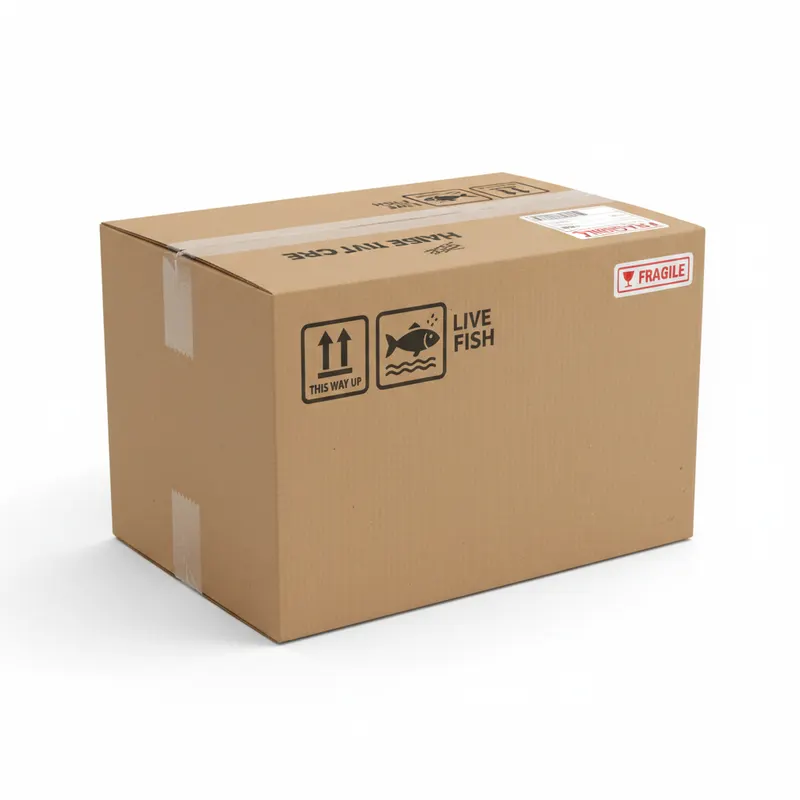
LIVE TROPICAL FISH
THIS WAY UP — with directional arrows
FRAGILE
KEEP OUT OF DIRECT SUNLIGHT
Pre-printed live animal shipping labels are available from aquatic suppliers and look more professional than handwriting. Inside the box, include a written contents list with species, quantities, and your contact details — if the outer label is damaged in transit, this gives the carrier something to work with and gives the buyer your details if they need to reach you urgently on arrival.
Species-specific notes
Fish with spines or sharp fins — plecos and catfish
Double bag as a minimum, triple bag for very spiny species. Pleco and catfish spines can puncture bags from the inside, particularly during the handling shocks of transit. Some sellers use a small rigid plastic container inside the bag for especially spiky species to prevent direct spine-to-bag contact.
Shrimp
More sensitive to ammonia than most fish — the stop-feeding rule applies with even more force here. A small piece of java moss or a sachet of zeolite in the shipping water helps absorb ammonia during transit. Shrimp tolerate 16–20°C reasonably well, so a heat pack isn't always required in mild weather.
Bettas
Always ship individually. Males will flare and stress each other through clear bags even without physical contact. Use opaque bags or separate dark containers for each fish.
Snails
Ship in damp paper towel rather than a bag of water — much lighter and less risky. A small sealed container with air holes works well and dramatically reduces the weight of the package.
Crabs and crayfish
Ship slightly moist rather than submerged. A damp cloth or sponge in a sealed container is ideal. Both groups are hardy travellers when kept moist.
Delicate or sensitive species
If there is genuine doubt about whether a species is suitable for postal delivery, don't ship it. Some species are not appropriate for standard next-day postal shipping and should only be sold via collection. A buyer's disappointment at a collection-only listing is far preferable to a DOA outcome for a fish that shouldn't have been shipped in the first place.
Shipping plants and invertebrates
Aquatic plants are considerably easier to ship than fish and significantly more forgiving of imperfect conditions. The key is keeping them moist but not waterlogged, and protected from temperature extremes.
Aquatic plants
Wrap stems in damp paper towel or damp newspaper — moist, not soaking
Place in a sealed plastic bag with a small amount of air
Cushion well in the box to prevent crushing in transit
Use a 24-hour heat pack in cold weather
Most aquatic plants tolerate two to three days in transit, but always ship next-day regardless
Tissue culture cups can go straight into a padded envelope or small box with minimal additional preparation
Note: several aquatic plant species are banned from sale in the UK under invasive species legislation, including Cabomba, Floating Pennywort, and Water Hyacinth. These cannot be legally listed for sale and must not be shipped. Check current legislation if you are unsure about any species.
Coral frags
Bag frags in a small amount of tank water — not RO water — with oxygen. Wrap in foam to prevent the frag plug from rattling around in the bag. Use an insulated box and heat pack as you would for fish, and book the earliest available next-day delivery slot. Transit time should be as short as possible for coral.
Collection as an alternative
For local sales, collection in person is often the best outcome for both parties. No transit stress, the buyer sees exactly what they're getting, no courier risk, and no packaging cost on either side. Many buyers actively prefer collection for expensive or rare fish where they want to assess the animal before completing the purchase.
If meeting a buyer you don't know, meet in a public place — a car park, petrol station, or supermarket entrance is ideal. Confirm payment before handing over the fish. Let buyers know in advance what they'll need: an insulated bag or polystyrene box, a heat pack in cold weather, and ideally a bucket with tank water if they're collecting larger fish. A buyer who arrives on a cold day with nothing to insulate the fish for the journey home creates a problem that's out of your hands once they leave.
DOA — protecting yourself and your buyers
Dead on arrival claims are an unfortunate reality of shipping live animals. The vast majority are preventable — but when they do happen, how they're handled matters for everyone involved.
For sellers — protect yourself before the shipment leaves
Photograph your fish bagged and ready before every shipment. This is your most important protection in any dispute — it proves the animals were alive and in good condition when they left you.
Keep your courier tracking number and delivery confirmation record
State your DOA policy clearly in your listing before any sale — buyers should know what's covered before they purchase
Use quality bags and a fresh heat pack every time — not reused bags or near-expired heat packs
If you have any doubt about a fish's health, do not ship it
For buyers — if fish arrive dead
Photograph the sealed bag immediately on arrival, before opening anything — time-stamped photos of the fish in the unopened bag are essential for any claim
Photograph the outer packaging as well
Contact the seller within two hours of delivery — most DOA policies have a notification window and missing it forfeits your claim
Do not open the bag before photographing if the fish are visibly dead
If the seller does not respond or resolve the issue satisfactorily, raise a dispute through the platform where the purchase was made
Purchases made through AquaLots are covered by buyer protection when payment is completed through the platform. Transactions completed outside the platform — bank transfer, PayPal, cash — are not covered by platform dispute resolution.
The most common causes of transit losses
Fish fed too recently before packing — ammonia spike in the bag
Bag sealed with air instead of oxygen
Heat pack placed directly on the bag without a buffer
Delivery not received — parcel redirected to a collection point and held
Economy or 2-day delivery used instead of guaranteed next-day
Fish already stressed or unwell before packing
Bag seal failure — leak in transit
Extreme temperatures — cold snap or heatwave during transit
Shipping on a Thursday or Friday — weekend depot holding risk
Almost every item on that list is preventable. The sellers with consistently high live arrival rates are not lucky — they follow the same process on every single shipment, regardless of how routine it feels. Good habits established early will serve you well for every fish you ship.