Search AquaLots
Find fish, plants, invertebrates and equipment
UK Tap Water and Your Aquarium
27 March 2026
More fishkeeping problems in the UK trace back to tap water than any other single cause. Not bad luck, not equipment failure — water chemistry that nobody told you about when you bought your fish. This guide explains what actually comes out of UK taps by region, why it matters for every fish in your tank, and what to do about it.
In this guide
The chloramine problem — the thing most UK fishkeepers don't know
The pH reality — what your tap water actually does in a tank
Why UK tap water is different from everywhere else
The United Kingdom has one of the most geologically varied landscapes in the world relative to its size — and that variation directly determines the chemistry of the water that comes out of your tap. Rain falling in the chalk downlands of Kent dissolves limestone as it percolates through, arriving at your tap carrying significant calcium and magnesium content that makes it hard and alkaline. Rain falling in the granite highlands of Scotland or the slate mountains of Wales passes over impermeable rock and picks up almost nothing, arriving at your tap as some of the softest, most mineral-poor water in Europe.
This matters enormously for fishkeeping because fish are adapted to specific water chemistry in their natural habitats. A neon tetra from the blackwater rivers of the upper Amazon has evolved in water with almost no dissolved minerals, a pH of 4 to 5, and virtually no buffering capacity. A Malawi cichlid has evolved in one of the world's most mineral-rich freshwater lakes with a pH consistently above 8 and hardness that would cause limescale on your kettle element. These are not interchangeable environments, and putting the wrong fish in the wrong water creates chronic, low-level stress that suppresses immunity, shortens lifespan, and prevents breeding — even when every other aspect of husbandry is correct.
The UK's water chemistry diversity means that what works in Manchester almost certainly doesn't work in London. What's fine in Edinburgh might need significant modification in Reading. Yet most fishkeeping advice — particularly the dominant American content that fills search results — is written for American tap water, which is itself wildly variable but tends toward softer water than the English average. UK fishkeepers applying American water chemistry advice are often solving the wrong problem entirely.
The three parameters that actually matter
Water chemistry can be tested across dozens of parameters, but for fishkeepers three are foundational: pH, GH, and KH. Understanding what each measures and how they relate to each other is essential before any discussion of regional UK water makes sense.
pH — acidity and alkalinity
pH runs from 0 (extremely acidic) to 14 (extremely alkaline) with 7 being neutral. For freshwater fishkeeping, the relevant range is roughly 5.5 to 8.5. Most community fish tolerate pH 6.5 to 7.5 without significant problems. Specialist fish from blackwater environments (cardinal tetras, discus, many South American cichlids) prefer pH 5.5 to 6.8. Fish from alkaline lakes (Malawi cichlids, Tanganyika cichlids) prefer pH 7.8 to 8.5.
What pH doesn't tell you is how stable it is — and stability is often more important than the specific number. A tank with a pH that fluctuates between 6.8 and 7.8 over 24 hours is more harmful to most fish than a stable pH of 7.8. Which brings us to KH.
KH — carbonate hardness and buffering
KH (carbonate hardness, sometimes called alkalinity) measures the carbonates and bicarbonates dissolved in the water. Its practical significance for fishkeepers is that it determines how well the water resists pH changes — its buffering capacity. High KH water is resistant to pH swings. Low KH water is vulnerable to rapid pH crashes.
In an aquarium, natural processes continuously work to lower pH — fish respiration produces carbon dioxide, biological filtration produces nitric acid, and organic matter decomposition produces various acids. In high KH water, the carbonate compounds neutralise these acids, keeping pH stable. In low KH water, the same processes cause pH to drop, sometimes dramatically and sometimes overnight.
This is why very soft, low KH water — common in Scotland, Wales, and parts of the North West — can cause what hobbyists call a pH crash: the tank's pH drops rapidly as carbonates are exhausted, killing fish that were apparently healthy. It's also why adding driftwood (which releases acids) or CO2 injection to a low KH setup requires careful management.
For general fishkeeping, KH above 4 dKH provides adequate buffering. Below 2 dKH, pH instability is a real risk. Most English tap water delivers KH of 8–20 dKH; most Scottish, Welsh, and North West water delivers 1–4 dKH.
GH — general hardness and minerals
GH (general hardness) measures the total dissolved calcium and magnesium in the water. This is the parameter most commonly meant when people say "hard water" or "soft water." High GH indicates mineral-rich water; low GH indicates mineral-poor water.
GH affects fish in several ways. Fish from hard water environments need the minerals — calcium is essential for bone development, muscle function, and heart rhythm. Shrimp need calcium to form exoskeletons and moult successfully. Very low GH water can cause moulting failure in shrimp (the white ring of death) and generalised health decline in fish adapted to harder conditions. Conversely, very high GH causes problems for fish adapted to soft water, particularly affecting kidney function and, critically, breeding — most soft water fish simply will not spawn in hard water regardless of how healthy they appear.
UK water hardness by region
The following regional breakdown is based on water supplier published data and geological distribution. Hardness is expressed in degrees of general hardness (dGH) with rough pH equivalents. Individual zones within regions vary — always check your specific postcode with your water supplier.
Very hard water areas (above 15 dGH, pH 7.5–8.3)
London — all zones. Thames Water supplies some of the hardest water in the UK, sourced from chalk aquifers. Most London postcodes receive water between 15 and 25 dGH with pH typically 7.6–7.9 from the tap (often rising further after CO2 off-gassing in the tank). This is genuinely difficult water for soft water fish species.
Kent — widely regarded as the hardest water in England. Chalk geology throughout creates water of 20–30 dGH in many areas.
Essex — hard throughout, sourced partly from chalk aquifers. Typical hardness 15–25 dGH.
Cambridgeshire — extremely hard. Much of the county sits on chalk and limestone, producing water above 20 dGH.
Suffolk and Norfolk — hard to very hard, supplied largely by Anglian Water from chalk sources.
Lincolnshire — hard, particularly in the south and east.
Hertfordshire and Bedfordshire — hard throughout.
East Midlands (Leicester, Northampton, Peterborough) — moderately hard to hard. Severn Trent and Anglian Water supply much of this region.
East Yorkshire (Hull) — hard, sourced from chalk.
Moderately hard water areas (8–15 dGH, pH 7.2–7.8)
West Midlands (Birmingham, Coventry) — moderate hardness, sourced partly from the Elan Valley reservoirs in Wales (naturally soft) blended with harder local sources.
Oxfordshire and Buckinghamshire — moderate to hard.
Hampshire and Wiltshire — variable, moderate in most areas.
Nottinghamshire and Derbyshire — variable. Eastern Nottinghamshire is harder; western Derbyshire (Peak District) is softer.
Leeds and West Yorkshire — variable, moderate in urban areas.
Bristol and Gloucestershire — moderate, sourced from the Severn catchment.
Soft water areas (below 8 dGH, pH 6.5–7.5)
Scotland — predominantly very soft throughout, particularly the Highlands. Edinburgh and Glasgow receive soft water from reservoir sources over granite and similar impermeable geology. Scottish Water supplies water consistently among the softest in the UK — typically 2–5 dGH in most zones.
Wales — very soft, particularly in the north and west. The mountains of Snowdonia and the Brecon Beacons produce extremely soft water that supplies much of Wales and is exported to supply parts of the West Midlands and Merseyside.
Greater Manchester and surrounding areas — soft to moderately soft. United Utilities sources water from Pennine reservoirs over impermeable Millstone Grit, producing water of 2–5 dGH in most Manchester postcodes.
North West Lancashire and Cumbria — soft. Lake District water is some of the softest available in England.
South West England (Devon and Cornwall) — mostly soft to moderate, sourced from moorland catchments over granite and other impermeable rock. Dartmoor and Bodmin Moor produce particularly soft water.
Sheffield and South Yorkshire — the Peak District catchment produces soft water for much of Sheffield, in contrast to the harder water found further east in the county.
North East England (Newcastle, Sunderland, Durham) — soft to moderate, sourced from upland Pennine catchments.
Hard water areas — what you're dealing with
If you live in London, the South East, East Anglia, or the East Midlands, you are in hard water territory. Here is what that actually means for your fish tank.
The limescale connection
If your kettle has white scale deposits inside it, your taps leave marks on glass, or your shower screen clouds with mineral deposits — your water is hard. The same minerals that form limescale on your appliances are present in your aquarium water. This is not inherently harmful; many fish species prefer exactly these conditions. The problem arises when hard water keepers try to keep soft water fish.
What hard water does to soft water fish
The effects are not always immediately dramatic, which is part of why the problem goes unrecognised for so long. Fish in significantly wrong water chemistry don't typically die overnight — they live, but not fully. The most common manifestations:
Suppressed immunity — fish in chronically wrong water parameters show reduced immune response, making them more susceptible to ich, velvet, bacterial infections, and other conditions that well-maintained fish would resist
Stunted colouration — many soft water species fail to develop full colour in hard water. Neon and cardinal tetras in hard water are often noticeably paler than the same species in appropriate conditions
Breeding failure — soft water fish often live apparently healthy lives in hard water but simply will not spawn. Most tetras, many barbs, South American cichlids, and other soft water species need soft, acidic water to trigger breeding behaviour and to produce viable eggs
Shortened lifespan — fish living in chronic mild stress from wrong water chemistry age faster and are more vulnerable to secondary conditions
Kidney damage in extreme cases — dissections of neon and cardinal tetras kept long-term in very hard water have revealed kidney damage suggesting chronic osmotic stress
The good news about hard water
Hard water is genuinely better for several important aspects of fishkeeping. Its high KH provides excellent pH buffering — pH crashes simply don't happen in well-maintained hard water tanks. Fish adapted to hard conditions (and there are many spectacular ones) genuinely thrive. And the mineral content benefits shrimp moulting, snail shell development, and the biological filter's bacterial colonies. Work with your water rather than against it and hard water fishkeeping is actually less demanding than soft water keeping.
Soft water areas — different problems, same importance
Keepers in Scotland, Wales, Manchester, and the South West face different but equally real water chemistry challenges.
The pH crash risk
Very soft water with low KH — typical of much of Scotland, Wales, and the North West — is vulnerable to pH instability. The biological filtration process produces nitric acid continuously. In hard water, carbonates neutralise it. In very soft water, there are no carbonates to buffer it, and pH can drop significantly between water changes. A tank whose pH reads 7.2 on Monday after a water change may read 6.2 by Friday as acids accumulate and carbonates are exhausted.
This matters because sudden pH drops — even within what's technically an acceptable range — cause acute stress that triggers disease and can kill sensitive fish rapidly. The safest approach in soft water areas is to maintain KH above 3–4 dKH using crushed coral in the filter, commercial KH buffers, or careful blending strategies.
The mineral deficiency issue
Very soft water lacks the calcium and magnesium that fish, shrimp, and plants need for basic biological function. Neocaridina shrimp in very soft water fail to moult successfully — the white ring of death (a gap in the exoskeleton at the junction of head shield and abdomen during a failed moult) is almost always a sign of inadequate GH. Livebearers in very soft water reproduce poorly and the fry are often weak. Even bacteria in the biological filter perform better with some mineral content present.
For most fish (not soft water specialists requiring very low GH), maintaining GH of 6–8 dGH is appropriate even in soft water areas. This requires adding a GH supplement — Seachem Equilibrium, Salty Shrimp GH/KH+, or similar products raise GH without significantly affecting pH.
The chloramine problem — the thing most UK fishkeepers don't know
This section covers what is probably the most widespread and least understood water quality issue in UK fishkeeping, and one that is directly harming fish in tanks across the country.
Chlorine vs chloramine
UK water is disinfected to kill pathogens before it reaches your tap. Historically, the disinfectant used was chlorine — simple, effective, and relatively easy to remove from aquarium water. Standard advice to "leave water out overnight" was valid because chlorine off-gasses into the atmosphere, and most dechlorinators neutralise it immediately.
Over the past fifteen years, a growing number of UK water authorities have switched from chlorine to chloramine — a compound of chlorine and ammonia that is more stable, more effective at preventing bacterial regrowth in long pipe runs, and safer for human consumption. The water authorities that have made this switch include Thames Water, Welsh Water, Scottish Water, and significant portions of Anglian Water's network.
Why chloramine is a bigger problem for fishkeepers
Chloramine does not off-gas. Leaving water out overnight does nothing to remove it. Standard cheap dechlorinators that work on chlorine often do not neutralise chloramine. And because chloramine is a chlorine-ammonia compound, even when chloramine is broken down by some dechlorinators, it releases ammonia into the tank — directly spiking ammonia levels in what should be a safe water change.
Practical Fishkeeping's water quality project found that many aquarists — including industry professionals — were completely unaware that their water supply had switched to chloramine. Jeremy Gay, a former editor of Practical Fishkeeping who worked in the aquatic trade in Northampton for many years, stated publicly that he had no idea chloramine was in his Anglian Water supply and that he had not been removing it properly throughout that time.
How to check if your water contains chloramine
The most reliable method is to download the Drinking Water Quality Report for your specific supply zone from your water supplier's website. Search your postcode on your supplier's site and look for the report for your specific zone — not a regional report, as chemistry varies significantly within a supplier's network. The report will state whether chlorine or chloramine is the disinfectant used.
Alternatively, if your water supplier is Thames Water, Welsh Water, Scottish Water, or Anglian Water — assume chloramine is present and treat accordingly unless your zone report confirms otherwise.
The solution
Use a dechlorinator specifically confirmed to neutralise chloramine. Seachem Prime is the most widely recommended product in the UK hobby for this purpose — it neutralises both chlorine and chloramine, detoxifies the released ammonia temporarily while the biological filter processes it, and has strong documentation of its effectiveness. Tetra AquaSafe Plus also handles chloramine. Check the product label specifically for chloramine neutralisation — basic dechlorinators that only list chlorine removal are not adequate if your water contains chloramine.
Never use the "leave water out overnight" method as your primary dechlorination approach. It is not reliable for chloramine and in chloramine water you may be doing water changes that add ammonia directly to your tank with every change.
The pH reality — what your tap water actually does in a tank
There is a well-known phenomenon that catches new fishkeepers out: the pH of water changes significantly after it has been in a tank for a few hours. Fresh tap water contains dissolved CO2 that artificially lowers pH. As water sits and CO2 off-gasses, pH rises — sometimes significantly.
This means that the pH of water straight from your tap is not the same as the pH of that water in your tank after 24 hours. In London, for example, fresh tap water might test at pH 7.6 but rise to 8.0–8.3 in the tank as CO2 dissipates. This is why experienced UK fishkeepers recommend testing water that has been aerated for 24 hours to get the actual equilibrium pH rather than the fresh-tap value.
The practical implications: if you're keeping fish that prefer pH 7.0–7.5 and your equilibrium tank pH is 8.0 due to hard, well-buffered water, no amount of pH adjusters added to the tap water before a water change will permanently fix this. The high KH will push pH back toward its natural equilibrium. You either choose fish appropriate for your water's natural pH, or you undertake the more significant intervention of RO treatment to reduce KH before buffering to target.
How to check your actual water parameters
Method 1: Your water supplier's website
Every UK water supplier publishes detailed water quality reports. Go to your supplier's website (Thames Water, Severn Trent, Anglian Water, Yorkshire Water, United Utilities, Southern Water, South West Water, Welsh Water, Scottish Water, or Northern Ireland Water) and search for water quality by postcode. The report will include hardness in milligrams per litre as calcium (mg/L Ca), pH, and the disinfection method used. Hardness in mg/L Ca can be converted to dGH by dividing by 10 — so 200 mg/L Ca ≈ 20 dGH.
Method 2: Home testing
A liquid reagent test kit (not test strips, which are not accurate enough for parameter-specific decisions) will measure pH, GH, and KH within a few minutes. API make widely available GH and KH test kits; their freshwater master test kit covers pH, ammonia, nitrite, and nitrate but not GH/KH, so you need the separate hardness kit for the full picture.
Test water that has been sitting in an open container for 24 hours with an airstone running — this gives you equilibrium pH, which is the pH your tank will actually stabilise at, not the fresh-tap pH affected by dissolved CO2.
Method 3: Ask your local aquatic shop
Many specialist aquatic shops test customer water and can tell you the hardness and pH of the local supply. This is particularly useful in areas where supply zones vary — a good shop will know their local water chemistry intimately.
The fish mismatch problem — why your fish keep dying
The most common scenario in UK fishkeeping that leads to repeated fish loss goes like this: a keeper in a hard water area sets up a tank correctly, cycles it properly, and adds a mix of fish chosen from the display tanks at a local shop. Some fish do well; others struggle chronically. Medications are tried, water changes are increased, different foods are offered — but certain species just won't thrive. The cause, unrecognised, is that the struggling species are soft water fish in water twice as hard as they tolerate long-term.
The species most commonly sold in UK shops that genuinely need soft water include:
Cardinal tetras — wild-caught specimens genuinely need soft, acidic water below pH 6.5 and GH below 6 dGH. Farm-bred specimens are more tolerant but still struggle in very hard water long-term
Neon tetras — similarly demanding, particularly wild-caught. Dissection studies have found kidney damage in neons kept in hard water
Discus — one of the most demanding soft water species. Breeding is essentially impossible without soft water
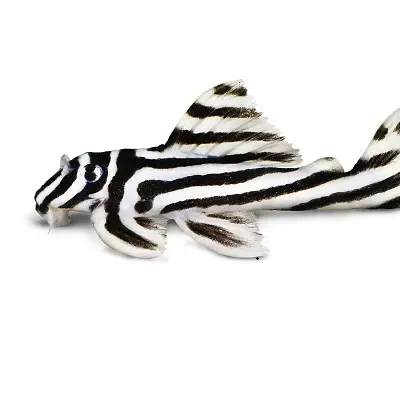
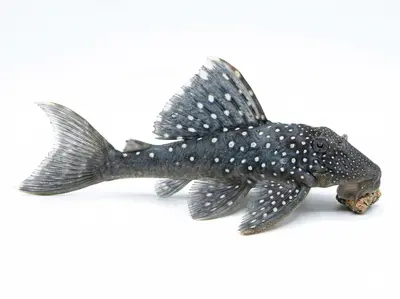
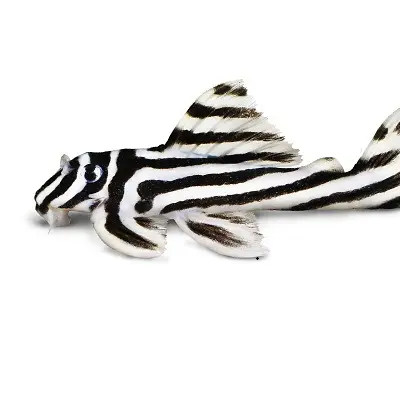
Most wild-caught L-number plecos — zebra plecos (L046), royal plecos, and many specialist species come from soft, acidic Amazonian water and need it long-term
Apistogramma — South American dwarf cichlids that genuinely need soft, acidic conditions particularly for breeding
Ram cichlids (German blue ram, electric blue ram) — notoriously hard to keep, partly because they have genuine soft, warm water requirements
Caridina shrimp — crystal reds, Taiwan bees, and other Caridina varieties need soft, acidic water that most UK hard water areas cannot provide without RO
The species most commonly sold in UK shops that genuinely thrive in hard water include livebearers (guppies, platies, mollies, swordtails), all Malawi and Tanganyika cichlids, goldfish and fancy goldfish, most rainbowfish, hillstream loaches, many temperate species, and most farm-bred community fish that have been bred in hard water for generations. See our companion guide to the best fish for hard water UK for the full species list.
How to soften hard water without spending a fortune
Full RO treatment is the gold standard for producing soft water of any target parameters. But several partial approaches can reduce hardness enough to bring more species within reach without the investment in an RO system.
Rainwater
Clean collected rainwater is naturally very soft — essentially pH neutral with minimal dissolved minerals. Blending 30–50% collected rainwater with hard tap water can reduce hardness significantly. Requirements: a clean collection system (not from a greenhouse or painted roof surface), testing to confirm the collected water is clean, and treating with dechlorinator for good measure. In practice this is less reliable than RO — contamination risk from roof surfaces, birds, and air pollution is real, and the chemistry of collected rainwater varies.
Peat filtration
Placing aquarium peat (not garden peat, which may contain additives) in the filter adds tannins and humic acids that gently lower pH and provide some water softening. It also colours the water brown, which is appropriate for blackwater biotopes but not for all setups. The effect is gradual and modest in hard water — peat filtration works better in already moderately soft water than in very hard water where the buffering capacity resists pH change.
Driftwood
Natural driftwood releases tannins that mildly lower pH. As with peat, the effect is modest in highly buffered hard water. Large quantities of driftwood over long periods produce a more noticeable effect. Water tannins are beneficial for many fish species regardless of the pH effect and are worth using for that reason alone.
Mixing with distilled or deionised water
Distilled water and deionised water are effectively mineral-free. Blending with hard tap water in calculated proportions reduces both GH and KH. The mathematics are simple: to achieve 50% of the tap water's hardness, blend 50/50 with zero-hardness water. Remineralise to target GH with an appropriate mineral supplement. More reliable than rainwater but involves ongoing purchase of distilled or deionised water, which becomes expensive at scale.
How to harden soft water
Keepers in soft water areas sometimes need to raise hardness to support livebearers, Malawi cichlids, goldfish, or prevent pH crashes.
Crushed coral — placed in a filter bag inside the filter, crushed coral (calcium carbonate) dissolves slowly into the water, raising both GH and KH simultaneously. The rate of dissolution increases at lower pH, providing a natural buffering feedback. Effective, inexpensive, and requires occasional replacement as it dissolves.
Limestone or coral gravel as substrate — similar chemistry to crushed coral but acts over the entire substrate surface. Use marine sand (calcium carbonate based) or coral gravel for Malawi cichlid tanks that need genuinely hard water.
Commercial mineral supplements — Seachem Equilibrium raises GH without raising KH significantly. Salty Shrimp GH/KH+ raises both. These allow precise target parameters to be hit reliably.
Malawi mineral salts — specific products formulated to create the alkaline, hard water chemistry of Lake Malawi. Used in addition to tap water in soft water areas for Malawi cichlid setups.
Reverse osmosis — when you actually need it
A reverse osmosis (RO) unit removes the dissolved minerals from tap water through a semi-permeable membrane, producing near-pure water that is then remineralised to target parameters. It is the only reliable way to achieve genuinely soft, acidic water in a hard water area.
You genuinely need RO if you want to keep:
Discus — particularly for breeding
Wild-caught cardinal tetras and other blackwater Amazonian species
Caridina shrimp (crystal reds, Taiwan bees, blue bolts)
Apistogramma for breeding
Wild-caught L-number plecos from blackwater origins
Ram cichlids reliably, particularly for breeding
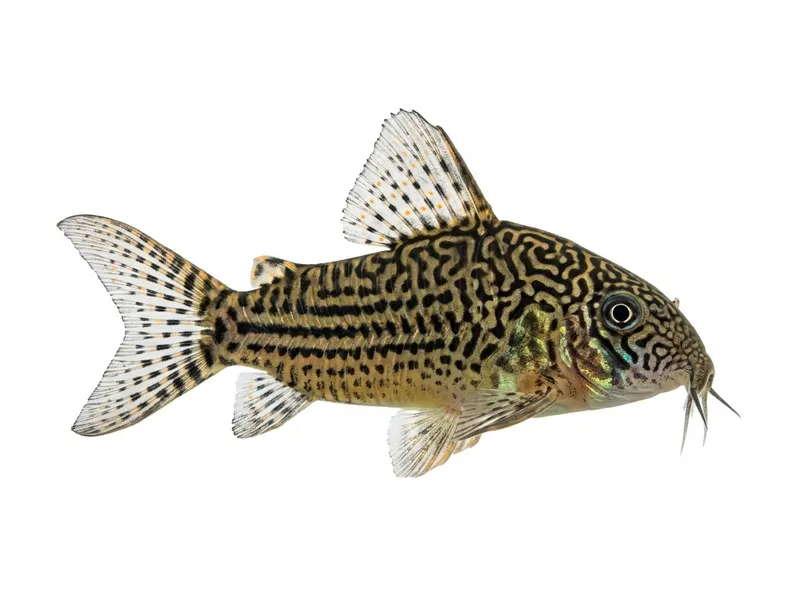
You probably do not need RO for most community fish, farm-bred soft water species (most tetras, most corydoras), Neocaridina shrimp, livebearers, goldfish, or any hard water species. The investment in an RO unit — typically £80–150 for a capable under-sink unit, plus ongoing membrane replacement — is only justified if you're keeping species that genuinely require it.
If you do use RO, always remineralise before adding to the tank. Pure RO water with zero GH and KH is not safe for fish — it has no buffering capacity and pH can crash unpredictably. Use an appropriate mineral supplement to raise GH and KH to the target for your chosen species before each water change.
The kribensis sex ratio problem in hard water
This is a well-documented but under-discussed phenomenon that is directly relevant to anyone breeding kribensis in hard water areas. In soft, slightly acidic water, kribensis (Pelvicachromis pulcher) produce roughly equal sex ratios in their broods — approximately 50% male, 50% female, as expected from standard genetics.
In hard, alkaline water, kribensis broods consistently produce a heavily skewed sex ratio — typically around 70–90% of one sex depending on the specific water chemistry. Which sex predominates depends on which direction the pH has shifted from neutral: acidic water (pH below 7.0) tends to produce more females, alkaline water (pH above 7.5) tends to produce more males. This is not myth or anecdote — it has been documented repeatedly by breeders and researchers and affects production planning for anyone breeding kribensis in hard water UK areas.
The practical implication for kribensis breeders: if your broods are consistently producing mostly one sex, check your water chemistry before assuming a problem with the pair. Soft water in the pH 6.5–7.0 range produces the most balanced sex ratios and the most productive breeding outcomes for this species.
Working with your water, not against it
The most sustainable approach to UK fishkeeping is to choose fish that match your tap water rather than spending ongoing effort and money fighting your tap water's natural chemistry. This doesn't mean you're limited — it means you're choosing from a different and equally impressive list of options.
Hard water keepers in London, Kent, East Anglia, and the East Midlands have ideal conditions for Malawi cichlids with their extraordinary colours, productive livebearer colonies, quality goldfish, rainbowfish, and many community species that have been farm-bred in hard water for generations. Soft water keepers in Scotland, Wales, Manchester, and the North West have ideal conditions for South American species, crystal shrimp, and many specialist fish that hard water keepers struggle with.
The key is knowing what's in your water before you choose what to keep — which is exactly what this guide is for. Check your postcode, understand your parameters, choose appropriate species, and use the right dechlorinator for your supply. Those four steps resolve the majority of water-related fishkeeping problems before they start.
Browse AquaLots listings by species to find fish from UK sellers who can tell you exactly what water parameters their stock has been raised in. Buying fish from a seller with similar water chemistry to yours dramatically reduces acclimation stress and the risk of losses after introduction. It's one of the most practical advantages of buying from a specialist UK marketplace rather than a general pet shop.